
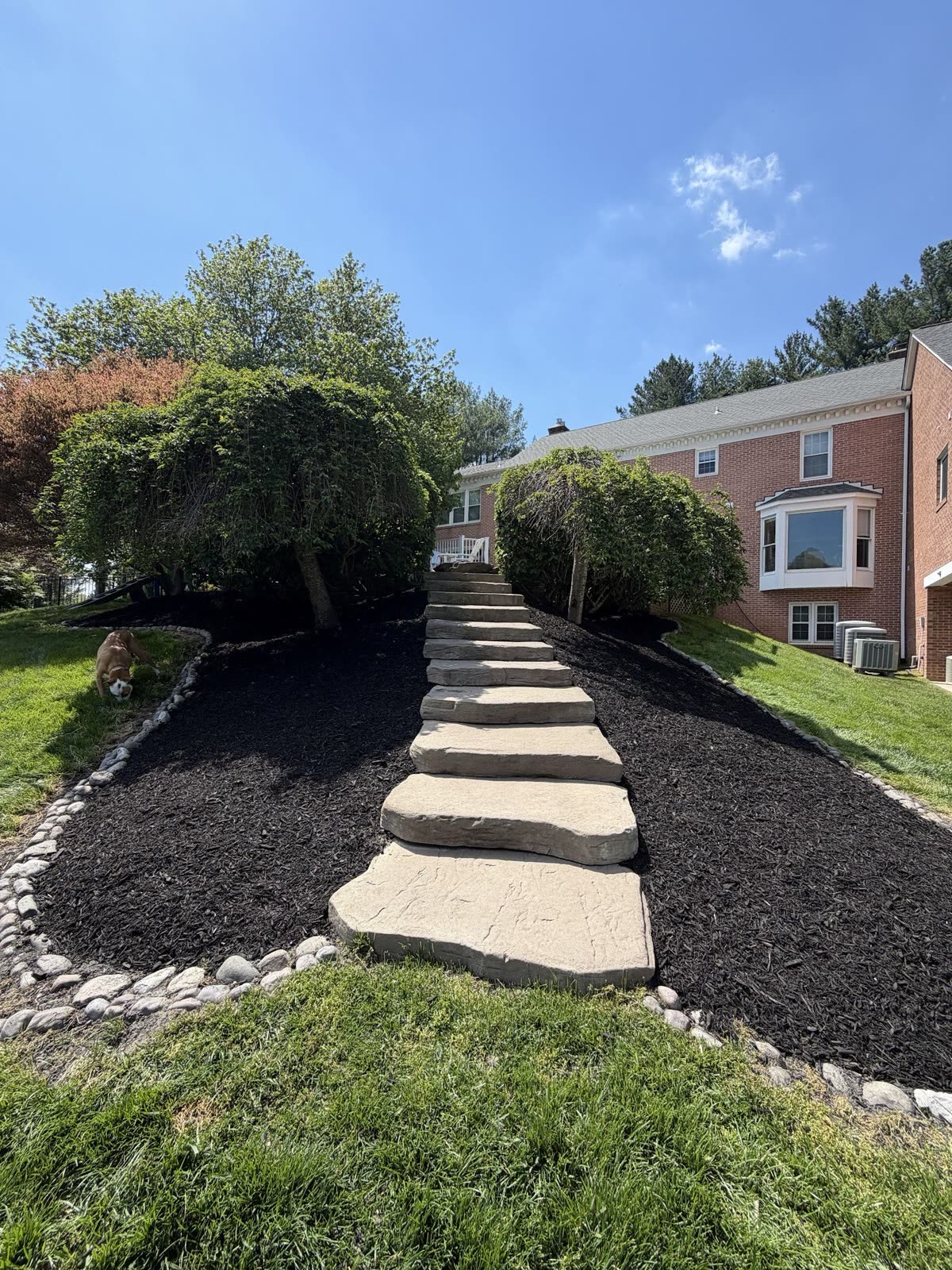
A retaining wall holds back soil on a slope. If your yard shows signs of washing out, leaning soil, or sliding mulch, a wall may be the right fix. Many yards in the Reisterstown and Westminster area have slopes that slowly move soil downhill over time.
What a retaining wall does
A retaining wall holds soil at two different levels. It turns a steep slope into flatter, more useful space. A well-built wall can also help control how water moves across the yard, which keeps soil in place after heavy rain.
Walls can be built from stone, block, or timber. Each one has its own look and its own strengths. The right choice depends on the height of the slope, the space you have, and how the wall will sit next to your home.
Signs your yard may need a wall
Look at your yard after a heavy rain. These signs often point to soil movement:
- Soil washing out, leaving gullies or bare patches on the slope.
- A slope that has started to slump or pull away from a patio or walkway.
- Mulch, soil, or stone sliding down onto the lawn, driveway, or sidewalk.
- A fence post, shed, or light pole that leans toward the slope.
- Tree roots lifting soil or cracking a nearby path.
- A low spot at the bottom of a slope that stays soggy long after the rain stops.
One sign alone may not mean a wall is needed. Several signs together usually mean the slope needs attention.
Why slopes move in Maryland yards
Yards across Baltimore County often see heavy spring rain and sudden summer storms. Water runs downhill fast over bare soil. Over time, it carves channels and carries soil away. Freezing and thawing in winter can also shift the ground, especially on steep areas.
Grass and deep roots hold soil well. Bare patches, heavy foot traffic, and missing mulch leave soil exposed. A retaining wall is one tool for the job, but better drainage, new plantings, and regrading can help too.
Other options to consider first
Not every slope needs a wall. Sometimes simpler changes do the job. Common options include:
- Regrading the soil to a gentler angle.
- Planting deep-rooted shrubs or groundcover that hold soil in place.
- Adding drainage, such as a shallow swale or a buried drain line, to move water away from the slope.
- Using mulch and erosion fabric while new plants take root.
A landscaper can walk the site with you and explain which options fit your yard. Sometimes a mix of small steps works better than one large project. Each option takes a different amount of time and labor, so compare them side by side.
Questions to ask before you build
Clear answers help you compare plans and understand the work. Good questions include:
- What is causing the soil to move in the first place?
- Will the wall need to handle water building up behind it?
- How tall will the wall be, and how will it look from the house?
- What base and drainage are planned for the wall?
- Where will the extra soil go once the work is done?
A good plan answers each of these questions in plain language before any digging starts.
Choosing a material for the wall
Stone has a natural look and blends well with garden beds. Block works well for taller walls when it sits on a proper base. Timber suits smaller garden walls and raised beds. Each material needs solid footing and good drainage to hold up over time.
Talk through the look you want, and ask how the wall will handle water. The best wall for your yard is the one that matches your slope, your budget, and the style of your home.
Planning the work around the rest of your yard
A retaining wall affects the lawn, plantings, patios, and walkways nearby. Plan the wall with the whole yard in mind. Think about access for equipment, where soil will be stored, and how the finished area will be used. Good planning keeps the project smooth and the yard looking cared for. Ask for a clear timeline, so you know when the area will be open to foot traffic again.
How Green Diamond Landscaping can help
Green Diamond Landscaping LLC is a family-owned landscaping and lawn care company based in Reisterstown, MD. We serve homes within about 25 miles of Reisterstown, across Baltimore County and Carroll County. That includes Westminster, Owings Mills, Eldersburg, Sykesville, Pikesville, and Towson.
Our crew handles hardscaping and stone work, and we know how a wall should sit within the rest of a yard. Learn more about our hardscaping and stone work. You can also see how we care for whole yards on our landscaping page.
We walk the property with you before anything is scheduled. That way the plan fits your slope, your yard, and your goals. We also offer same-day response to requests, so you can get answers quickly.
Seeing signs of soil movement in your yard? Call Green Diamond Landscaping at (410) 847-9393 for a free estimate. We will walk the property with you, answer your questions, and suggest the right next step for your slope.
Frequently Asked Questions
How do I know if my yard needs a retaining wall?
Look for washed-out soil, slumping slopes, sliding mulch, leaning posts, or soggy low spots after rain. Several signs together usually mean the slope needs attention.
Are there options besides a retaining wall?
Yes. Regrading, deep-rooted plantings, drainage, and mulch with erosion fabric can help some slopes. A landscaper can tell you which options fit your yard.
What materials are used for retaining walls?
Stone, block, and timber are common choices. Each one needs a solid base and good drainage to last.
Do you offer free estimates for retaining walls?
Yes. Green Diamond Landscaping offers free estimates, and we walk the property with you before anything is scheduled.