
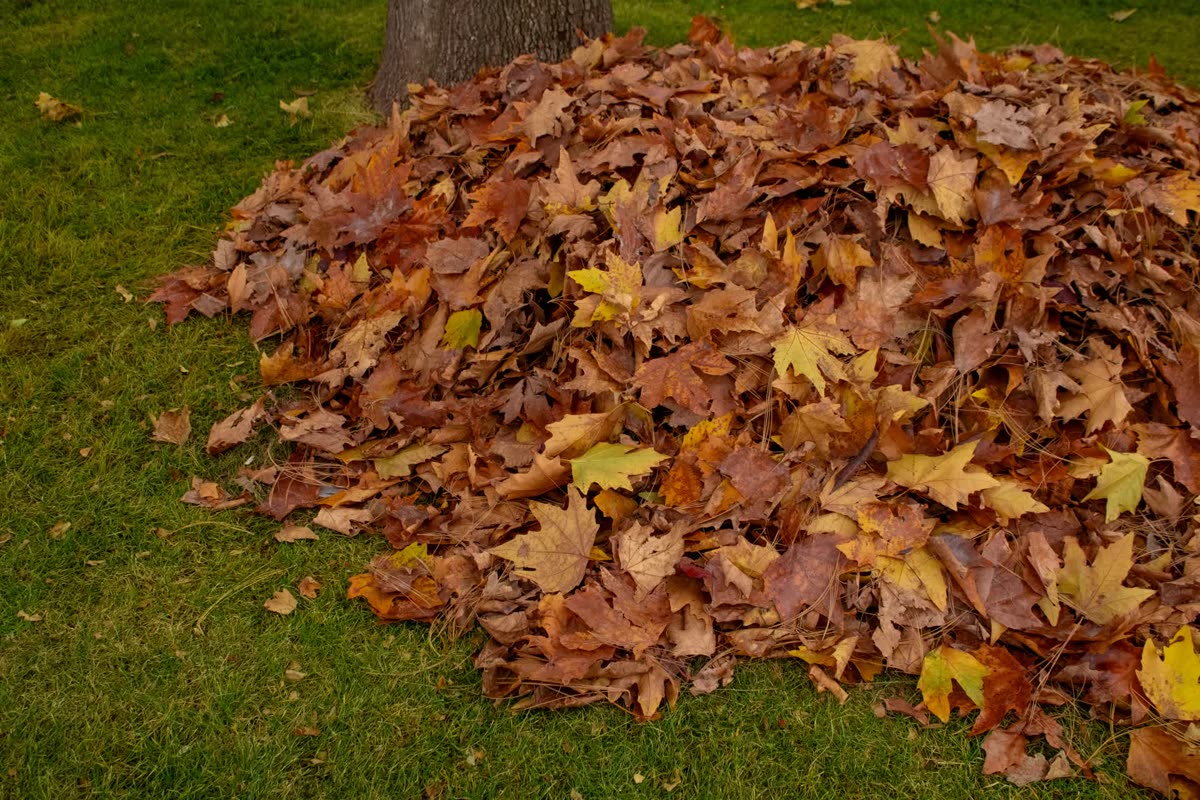
Book fall cleanup in September, before peak leaf drop hits Reisterstown in late October through mid-November. A real cleanup includes leaf removal, bed cleanout, final shrub trimming, gutter cleaning, and a last mow. Left over winter, matted leaves block sunlight, trap moisture that breeds snow mold, and give voles cover to tunnel under all season.
What Do Leaves Actually Do to a Lawn?
A thin scattering of leaves is harmless, but a wet, matted layer isn’t. It blocks sunlight during the exact weeks cool-season grass stores energy for winter, traps moisture that breeds snow mold, and gives voles a roof to tunnel under all season. The lawn that shows up in March was decided by the leaves left in November.
University of Maryland Extension lists snow mold among the cool-season lawn diseases favored by wet, matted debris and excess moisture sitting on turf through winter — one more reason a thick leaf layer left in place does more harm than good.
What Does a Real Fall Cleanup Include?
A real fall cleanup covers five things: leaf removal from the lawn, beds, and wind-piled corners; a bed cleanout of spent annuals and debris; final shrub trimming so plants hold their shape under snow; gutter cleaning to prevent ice dams; and a slightly lower last mow to reduce matting risk.
- Leaf removal — lawn, beds, and the corners where wind piles them, hauled away.
- Bed cleanout — spent annuals and debris out before they rot against stems all winter.
- Final trimming — shrubs shaped so they hold their structure under snow.
- Gutter cleaning — the natural pairing, since clogged gutters in a Maryland freeze mean ice dams.
- Last mow & edge — a slightly lower final cut so matting is less likely.
When Should Fall Cleanup Be Booked in the Reisterstown Area?
Peak leaf drop in northwest Baltimore County runs late October through mid-November, and cleanup schedules fill four to six weeks ahead of that. Booking in September guarantees a slot at peak season; waiting until the yard is already buried usually means waiting in line behind everyone else who had the same idea.
Does a Yard Need One Cleanup or Two?
Yards with heavy tree cover often do best with two passes: a mid-drop visit so the lawn isn’t smothered for weeks, then a final clean after the last leaves let go. Lighter yards usually get away with one thorough late-season pass — the right call depends on how much canopy sits over the property.
Heavily wooded neighborhoods like Glyndon and Garrison are the classic two-pass case; more open yards typically just need the single late visit done well.
Should Gutter Cleaning Happen at the Same Time?
Yes — it’s the same trees dropping the same leaves, so pairing gutter cleaning with a fall cleanup means one contractor visit instead of two. Skipping it risks clogged gutters backing up into ice dams during a Maryland freeze, a much bigger, messier problem than clearing gutters while a crew is already on-site for leaves. For timing and frequency, see when gutters should be cleaned in Maryland.