
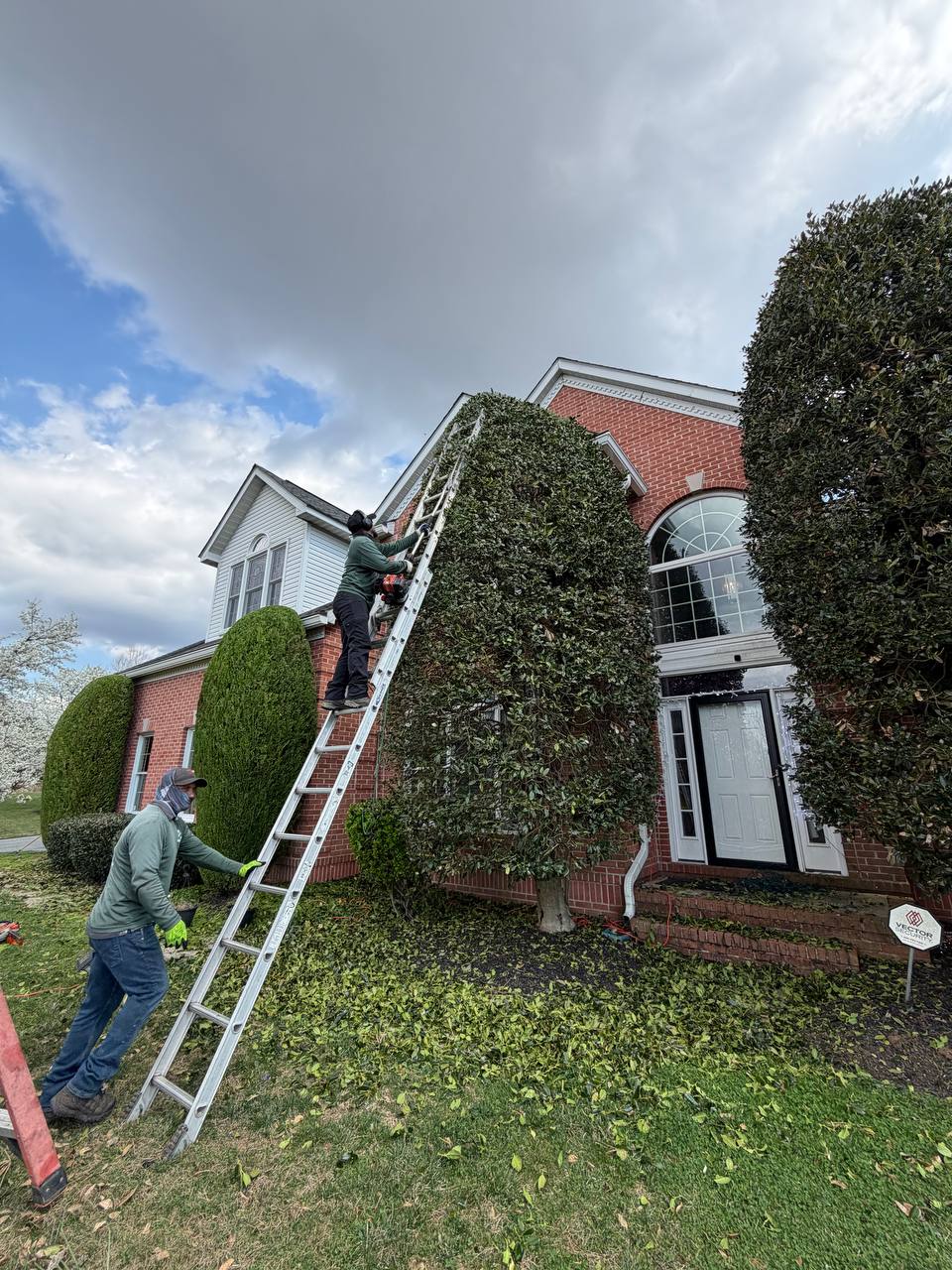
The best time to trim most hedges in Maryland is in the cooler months, after the worst of the winter has passed and before the new growth gets going. Light trimming during the growing season keeps hedges tidy. The key is timing, the right tools, and a shape that lets sunlight reach the lower branches.
Know When to Trim
Timing depends on the plant. Spring-blooming shrubs set their flower buds in the months before they bloom. If you cut them too late in the year, you may remove the flowers you wanted to see. For these shrubs, wait until after they finish blooming, then shape them. Many evergreen hedges, such as boxwood and holly, can take a shaping trim in late spring or early summer. Avoid heavy cuts in late summer, because fresh growth may not harden off before cold weather arrives.
Maryland weather can change quickly. A warm spell in late winter can wake plants up early, so watch the buds. If the plant is putting out new growth, go easy and trim only what you need.
Gather the Right Tools
Clean, sharp tools make a big difference. Dull blades tear the stems and leave ragged ends that turn brown. Hand pruners work well for small branches and fine detail. Hedge shears are best for long, even lines. A pole hedge trimmer can reach the top of tall hedges, but use it carefully and keep the blade at a safe height. Wipe your blades with a clean cloth between plants to keep diseases from spreading.
Shape the Hedge the Right Way
Shape the hedge so it is a little wider at the base than at the top. This is sometimes called a soft A shape. Sunlight can then reach the lower branches, and those branches stay full and green. A hedge that is wide at the top and narrow at the bottom often thins out and goes bare near the ground.
Work slowly. Step back every few feet and check both sides. Keep the top level by using a string line or a long board as a guide. It is easier to take off a little more later than to fix a cut that went too deep.
Avoid Cutting Back Too Far
The biggest mistake is cutting too much at one time. Most hedges look best when you remove no more than about a third of the plant in one visit. A hard cut can shock the plant and leave bare spots that take a long time to fill in.
Be careful with older wood. Many evergreens, including arborvitae and yew, may not sprout from bare, leafless wood. If you cut into that wood, the spot may stay empty. Stay within the green foliage whenever you can. Make each cut just above a leaf node or a side branch, so the plant can keep growing from that point.
Look for Dead and Damaged Growth
Start every trim by removing dead, broken, or diseased branches. Cut them back to healthy wood. Dead wood is often brown, brittle, or hollow. Diseased areas may look sunken, spotted, or unusually thin. Remove and bag these clippings rather than leaving them on the ground. Good cleanup helps the hedge recover faster and keeps the plant healthy through the next season.
Plan for Your Yard
Think about the purpose of the hedge before you trim. A privacy hedge along a property line may need a fuller shape and a bit more height. A low hedge along a walkway should stay neat and easy to walk past. Hedges near a driveway or street need clear sight lines, so keep the top and corners trimmed back. Plan your trim so the finished hedge fits the space and the way you use it. Look at the hedge from the house, too. A hedge that frames a window or a front door should look balanced from inside and outside. Walk around the hedge after each trim and pick up the cuttings as you go. Cleaning up as you work saves time and keeps the lawn and beds looking neat for the rest of the week. If you have a lot of material to haul away, plan for it before you start, so the clippings do not sit in the driveway for days.
Water the hedge well after a heavy trim, especially during dry spells. New growth needs moisture to recover. A thin layer of mulch around the base helps the soil hold water and keeps weeds down. These simple steps help the hedge look its best between visits.
Local Hedge and Yard Care in Baltimore and Carroll Counties
Green Diamond Landscaping LLC is a family-owned landscaping and lawn care company based in Reisterstown, MD. We serve homes across Baltimore County and Carroll County, including Owings Mills, Pikesville, Towson, Westminster, and Eldersburg. We walk the property with you before anything is scheduled, so you know exactly what the plan includes. Our team also offers lawn care, seasonal cleanups, and pressure washing for the same properties.
For more on our yard care work, visit our seasonal cleanups page. To see how we plan full landscape projects, read about our landscaping services.
Ready to get your hedges back in shape? Call Green Diamond Landscaping at (410) 847-9393 for a free estimate. We respond the same day to requests, and we will help you choose the right timing and shape for your yard.
Frequently Asked Questions
When is the best time to trim hedges in Maryland?
Most hedges do well with a light trim in late spring or early summer. Spring-blooming shrubs should be trimmed right after they finish flowering. Avoid heavy cuts in late summer.
How much of a hedge can I cut at one time?
Remove no more than about a third of the plant in one visit. Larger cuts can shock the plant and leave bare spots that take a long time to fill in.
What shape is best for a hedge?
A hedge that is a little wider at the base than at the top lets sunlight reach the lower branches. This keeps the hedge full and green from the ground up.
Should I trim hedges myself or hire a pro?
Light shaping is a good project for a homeowner with sharp tools. Large hedges, tall plants, and work near power lines are better left to a professional crew.