
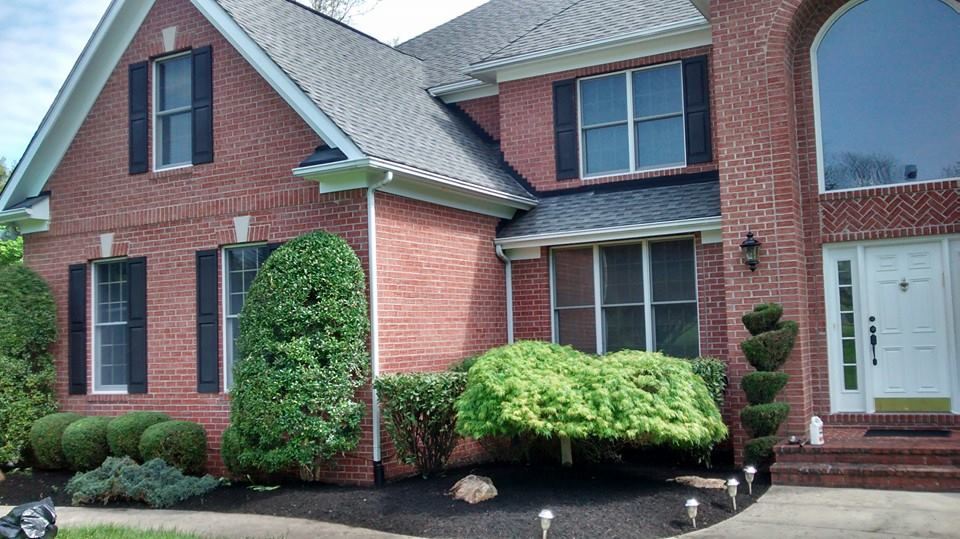
What is house washing, and how is it different from pressure washing?
House washing is the cleaning of a home’s exterior walls, usually siding, with a method matched to the material. Pressure washing relies on strong water force and suits hard surfaces like concrete, asphalt and pavers. House washing normally means a soft wash: low pressure combined with a cleaning solution that breaks down the organic growth on the surface so it rinses away, instead of being blasted off.
The distinction matters because siding is not built to take the same force as a driveway. The goal on a house is to remove the growth, not to push as much water as possible at the wall.
Is it safe to pressure wash vinyl siding?
It can be done carefully, but most guidance points toward soft washing for vinyl. Strong water pressure can crack or dislodge panels, and it can drive water up and behind the siding where it is hard to see and slow to dry. Moisture trapped in that gap is exactly the kind of damp spot where mold likes to grow, so a wash meant to clean the house can end up creating a new problem. Some manufacturers also restrict or discourage high-pressure washing in their care instructions, so it is worth checking yours.
Which surfaces is soft washing right for?
A soft wash is generally the approach for surfaces that can be damaged by force or that carry paint and trim details:
- Vinyl and aluminum siding — cleaned without risking cracked or displaced panels
- Painted wood and trim — cleaned without stripping the finish
- Brick and masonry walls — algae and mildew removed at a gentler setting than a driveway would get
- Decks and fences — cleaned and prepped without chewing up the wood
Driveways, walkways and patios are the opposite case: those are the surfaces where higher-pressure cleaning belongs. A good wash uses both methods on the same property, each where it fits. You can see how that split works on our pressure washing page.
What causes the green and black streaks on siding?
Those streaks are almost always algae, mold or mildew, not dirt. They show up first on the sides of a house that stay damp longest — north-facing walls, siding under heavy tree cover, and areas near downspouts or where a gutter overflows. Maryland’s humid summers and the mature trees around Reisterstown, Owings Mills and Carroll County give growth plenty to work with. If streaking appears in the same line below the roofline every year, check the gutters too, since overflow runs down the same path every time it rains.
How often should a house be washed in Maryland?
Most guidance puts the baseline at about once a year, and that is a sensible starting point for most Maryland homes. Shaded lots, homes surrounded by trees and houses where growth returns quickly can justify a second look sooner, while a sunny, open lot may stretch longer between washes. The most honest answer is to watch how fast the streaking comes back on the shadiest wall and adjust from there. Soft washing also tends to do better on organic growth than on stains that have set for years, so washing before buildup gets heavy usually gives the better result.
When is the best time of year for house washing in Maryland?
Spring is the common choice because it clears off what a damp winter left behind and gets the house ready for outdoor season. Fall works too, particularly if you want mold and mildew off before months of cold, damp weather with less sun to dry things out — our guide on pressure washing before winter covers that timing. What matters most is picking a stretch of mild, dry weather so the siding dries fully afterward rather than freezing while still damp.
What should be done before a house wash?
A little prep makes a big difference in the result and in protecting what is around the house:
- Close windows and doors, and make sure screens and seals are in good shape
- Move patio furniture, grills, planters and anything else sitting against the walls
- Trim back shrubs and branches that crowd the siding so every section can be reached
- Clear gutters first so clean water does not run over a freshly washed wall
- Think about beds and plants next to the house, since they are the first thing affected by runoff
Can house washing be combined with landscaping and cleanups?
Yes, and it is one practical reason to keep it with a landscaping company. The same crew that maintains your lawn and beds already knows the property, so house washing can be scheduled alongside a seasonal cleanup instead of as a separate trip, and it can be planned around your landscaping so plants beside the house are accounted for.
What we recommend for Maryland homes
For most Reisterstown-area homes with vinyl, aluminum or painted siding, we recommend a soft wash for the house and pressure washing only for the hard surfaces around it. Plan on roughly an annual wash, start with the shaded sides that streak first, and clear the gutters beforehand. Before you book anyone, ask how they match method to surface and how they protect your plants and windows. If you would like us to look at the house, we offer free estimates and walk the property with you before anything is scheduled.