
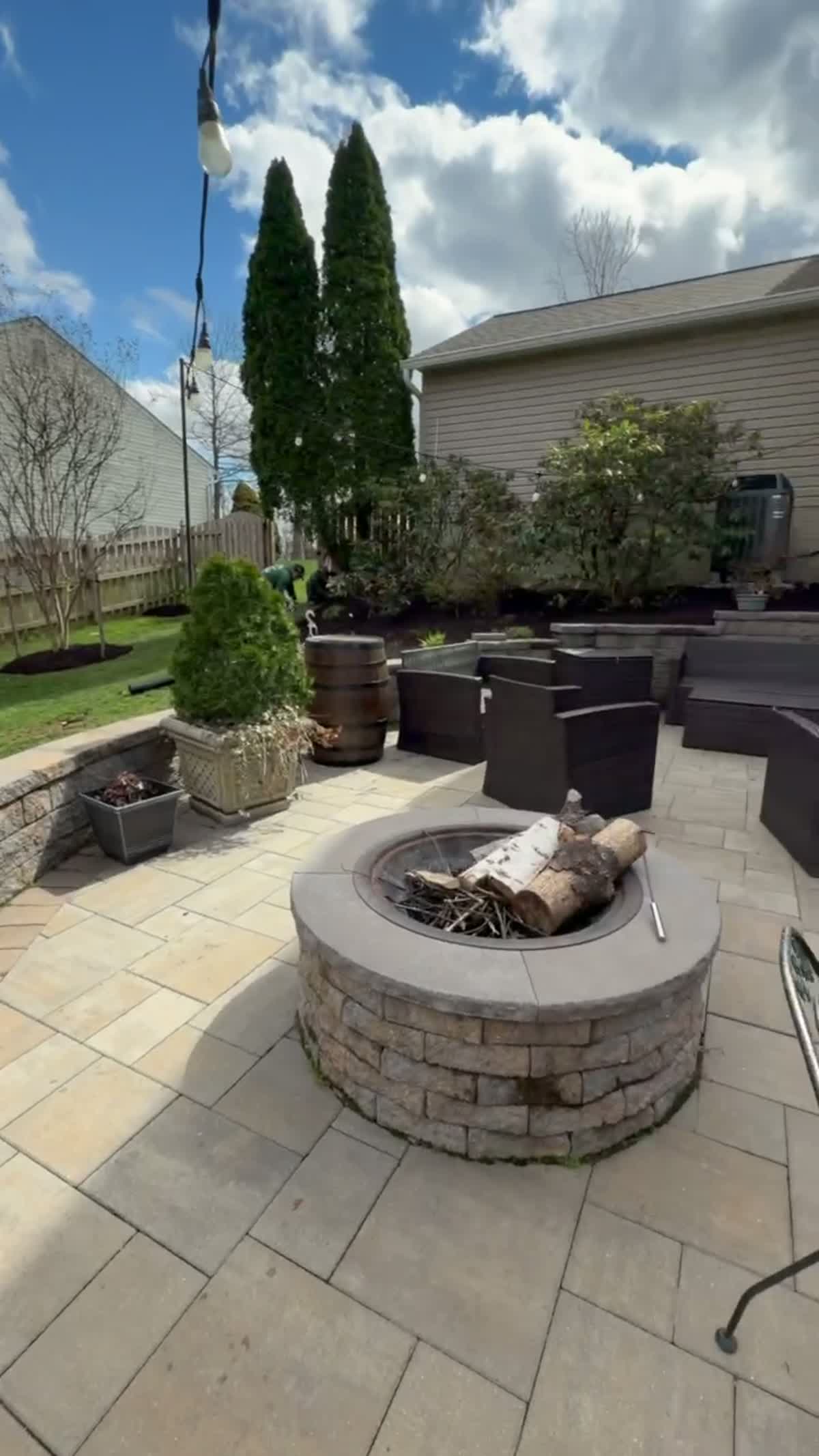
Pavers and poured concrete both hold up in Maryland’s climate when installed correctly, but they behave differently under our freeze-thaw winters. Pavers flex slightly and are repaired one section at a time; concrete is a single rigid slab that can crack under freeze-thaw stress and is harder to patch invisibly. The right call depends on your soil, drainage, and how you want to handle repairs down the road.
Why does freeze-thaw matter so much in Maryland?
Maryland winters swing above and below freezing repeatedly, and that repeated cycle is what stresses hardscaping more than a single hard freeze would.
Water in the soil beneath a patio expands when it freezes and contracts when it thaws. A rigid concrete slab has no give, so repeated freeze-thaw cycles can eventually crack it, especially if the base beneath wasn’t compacted properly. Pavers are individual units set on a compacted base with sand joints, so they can shift slightly with the ground and settle back without cracking the way a solid slab would.
How does drainage factor into the decision?
Poor drainage is the single biggest cause of hardscaping failure in this region, more than the material choice itself.
- Water that pools against a patio and then freezes is what drives most cracking and heaving
- A proper base (compacted gravel, correct slope away from the house) matters more for long-term durability than whether you choose pavers or concrete
- Permeable paver systems can let water drain through the joints rather than run off, which helps on clay-heavy Baltimore and Carroll County lots
- Poured concrete needs control joints cut in at install to manage where cracking happens, since it will crack somewhere eventually
Whichever material you pick, the base prep underneath it is what determines whether the patio lasts.
Which one is easier to repair?
Pavers can be repaired section by section; a cracked concrete slab usually can’t be patched invisibly.
If a paver settles, heaves, or gets stained, that individual paver (or a small section) can be lifted, the base corrected, and the paver reset — with no visible difference from the surrounding patio in most cases. Concrete doesn’t offer that option. A crack in a slab is permanent unless the whole slab is replaced, and patch repairs on concrete are usually visible as a different color or texture, since it’s difficult to color-match an existing slab that’s aged and weathered.
Do HOA rules or permits come into play?
Often, yes — check before design begins, not after.
Many Baltimore County and Carroll County HOAs have specific rules about patio materials, setbacks from property lines, and sometimes overall hardscape square footage. Some jurisdictions also require a permit for larger patios, especially if grading or drainage changes are involved. This varies by municipality and HOA, so it’s worth confirming with your specific HOA and local permitting office before finalizing a design — a landscaper can flag likely requirements but can’t waive them.
What does base prep actually involve?
Base prep is the excavation, compaction, and grading work that happens before any pavers or concrete go down — and it’s where corners get cut most often.
- Excavating to the correct depth for the base material and patio thickness
- Compacting a gravel base in layers rather than all at once, so it doesn’t settle unevenly later
- Grading the base with a slight slope away from the house to move water off the patio
- For pavers: a sand setting bed on top of the compacted base, then edge restraints to keep the perimeter from spreading
- For concrete: rebar or wire mesh reinforcement and properly placed control joints before the pour
A patio that fails within a few years almost always traces back to inadequate base prep, not the surface material itself.
Which material handles tree roots and shifting ground better?
Pavers generally handle minor ground movement better because the system isn’t rigid.
If a nearby tree root grows under a section of paver patio, that section can lift and be reset without demolishing the whole patio. The same root under a concrete slab will crack it, and the crack will keep growing as the root does. This is worth considering if the patio location is anywhere near mature trees.
Choosing between pavers and concrete is part of every hardscaping and stone work project we design — we’ll walk you through the tradeoffs for your specific soil and drainage before anything is dug. The estimate is free and we respond the same day.