
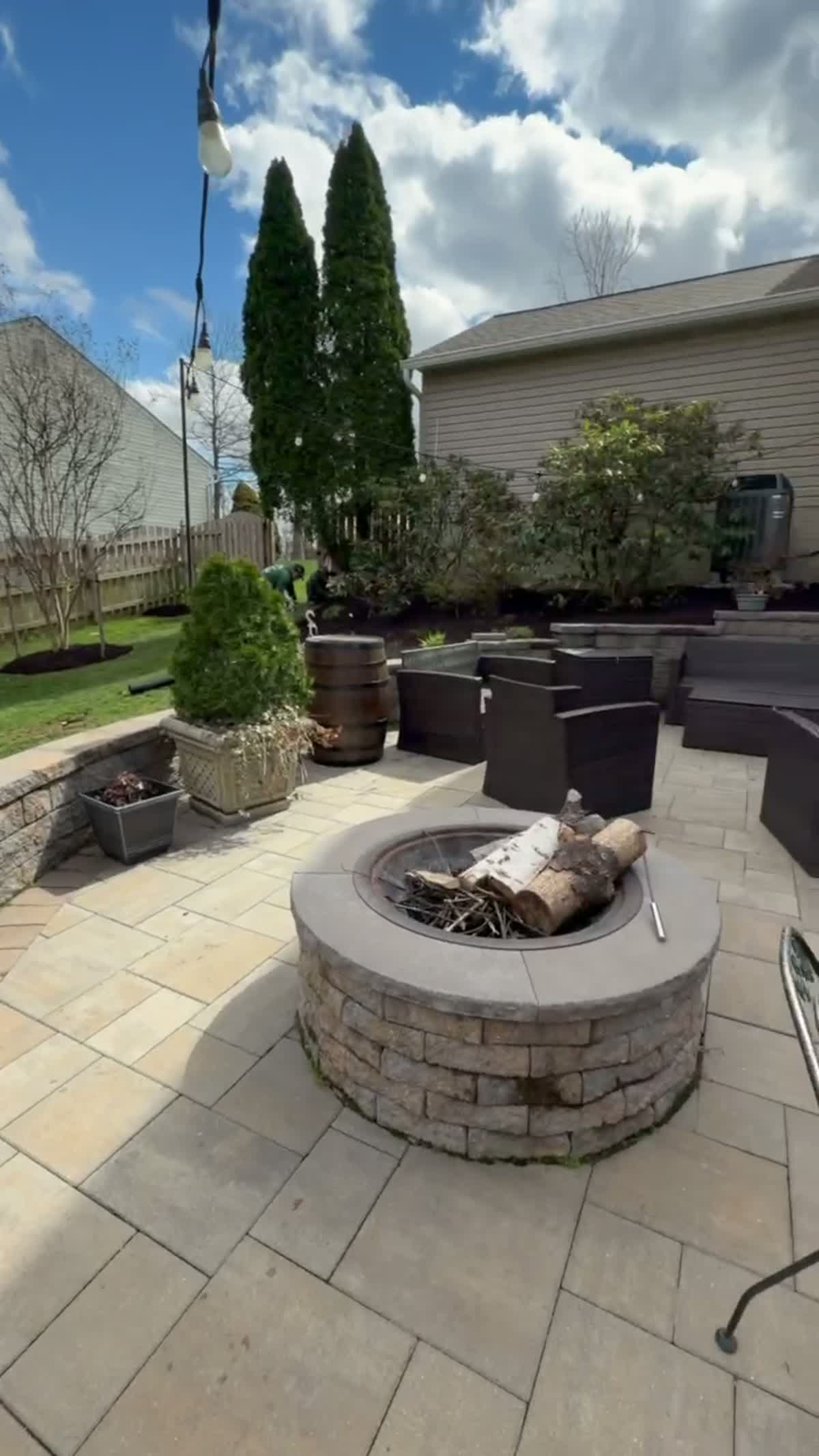
A fire pit patio works best when you plan it before any stone goes down. The right spot, a solid base, enough seating room and safe clearances all matter. Get those four things right, and your fire pit can be a relaxing part of your yard for years to come.
Maryland yards come with their own challenges. Spring rain saturates the soil, winters freeze and thaw, and many lots slope toward the house. Each of these affects where the fire pit goes and how the patio is built. Here is how to plan it step by step, whether your yard is in Reisterstown, Owings Mills, Towson or anywhere nearby.
Step 1: Pick the Right Location
Start by looking at the whole yard. Where do you spend your evenings? Where is the view best? A fire pit close to the house is handy for bringing out food and drinks. A spot farther out keeps smoke and heat away from doors and windows. Choose a place where smoke drifts away from the seating, not toward it.
Check the sun and wind too. Afternoon sun can make a patio uncomfortable in summer. Wind from one direction can push smoke into the seating area all evening. Watch the yard at different times of day before you decide.
Step 2: Look Up and Look Around
Overhead clearance matters as much as ground space. Check for low tree branches, power lines, porch roofs and eaves. Smoke and sparks rise, so keep the fire pit well clear of anything that hangs overhead. Look around the site too. Fences, sheds, wood piles, dry mulch and outdoor furniture should all sit well back from the fire.
Step 3: Check Local Rules and Property Lines
Before you dig, check local rules about outdoor fires in your county or town. Some communities limit fire pits, require a set distance from structures or ask for a permit. If your home is part of a community association, check its rules too. Confirm where your property lines are so the patio stays on your land. Call 811 before you dig so utility lines are marked.
Step 4: Build a Solid Base
A fire pit sits on heavy stone, so the base matters. Start with excavation to remove topsoil and loose material. Then add a compacted layer of gravel, followed by a bedding layer of sand or stone dust. Compact each layer in thin lifts. A firm base keeps pavers level and helps prevent sinking, heaving and cracks, especially after Maryland's freeze and thaw cycles.
Drainage needs attention too. Water should move away from the house and the fire pit area. Standing water can soften the base and undermine stones. Build in a slight slope so rain runs off rather than pooling in the middle of the patio.
Step 5: Plan the Seating Space
Think about how many people will use the patio at once. Leave room to walk around the seating without stepping over the fire. Chairs need space to pull back. Benches or low walls can double as seating and give the space a finished look. Plan a clear path from the door to the patio so guests can come and go without crossing hot ground.
Consider seat height and the view of the flames. People sitting low in deep chairs may struggle to see over a tall fire pit. A ring of stone seating or a few sturdy chairs often works well. Test the layout with the furniture you already own before you buy anything new.
Step 6: Choose Materials That Handle Heat
Not every stone or paver handles heat well. Choose materials made for outdoor fire features. Keep flammable items off the patio, including plastic furniture cushions and dry leaves. Ask your installer which materials they recommend for the fire pit ring and the seating areas.
Step 7: Keep Safe Clearances
Clearance means open space between the fire and anything that can burn. Keep the fire pit away from the house, detached buildings, fences, trees and shrubs. Clear the ground of dry leaves, pine needles and mulch around the patio. Keep a hose, a shovel and a bucket of sand nearby. These simple tools make it easier to handle a flare-up quickly.
Never leave a fire unattended. Burn only the fuel your fire pit is designed for, and keep it dry. Keep children and pets back from the flames. Let the fire burn down and cool fully before you leave the area.
Fitting the Patio Into the Whole Yard
- Grading: confirm the patio slopes away from the home.
- Planting: plan low beds around the edge that will not catch sparks.
- Lighting: add soft lights for evening use, and keep wiring out of the fire zone.
- Lawn: plan a clear mowing path and edge the patio cleanly.
A patio project often works best alongside planting and lawn care. Our hardscaping and stone work service can help plan the patio itself. For the planting that frames the space, our landscaping and garden design service can help you choose beds that suit your yard.
Questions to Ask Before You Start
- Where will the smoke go on a typical evening?
- How will the base handle drainage and freezing?
- How many people do I want to seat comfortably?
- What clearances do local rules require?
Green Diamond Landscaping LLC is a family-owned company based in Reisterstown, MD. We serve homes within about 25 miles of Reisterstown across Baltimore County and Carroll County, and we respond same day to requests. We walk the property with you before anything is scheduled. Call (410) 847-9393 to request a free estimate for your fire pit patio.
Frequently Asked Questions
How far should a fire pit be from the house?
Keep it well away from the house, fences, sheds and overhanging branches. Many areas also set their own distance rules, so check local requirements before you build.
Does a fire pit patio need a proper base?
Yes. A compacted gravel base and a bedding layer keep pavers level and help prevent sinking, heaving and cracks, especially in Maryland's freeze and thaw seasons.
What happens during a site visit?
Green Diamond walks the property with you before anything is scheduled. The visit is a good time to talk through location, drainage, seating and clearances.