
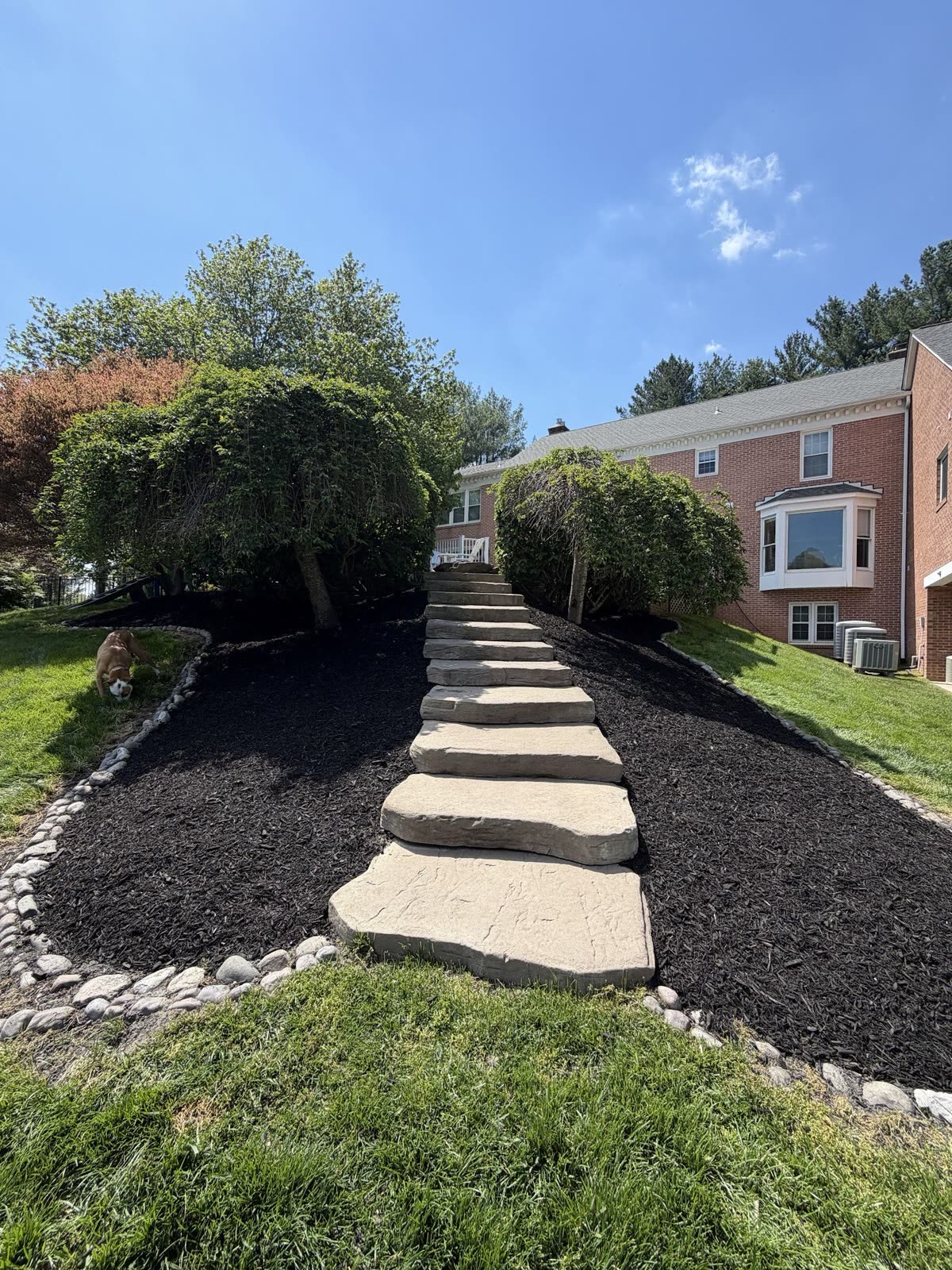
Winter salt and ice can do real damage to plant beds, lawn edges and paver walkways in Maryland yards. Salt pulls moisture from roots and soil, and freeze-thaw cycles can shift pavers and crack joints. Simple steps in late fall and early winter can protect your plants and hardscape for the season ahead.
How Salt Harms Plants and Soil
Road and walkway salt dissolves in melting snow and runoff. That water soaks into the soil near walks and driveways. Over time, salt can build up in the root zone. Plants may show brown leaf edges, slow growth or thinning along the bed edge. Evergreens and shrubs near the walk often show the first signs.
Salt can also affect grass along edges, where the lawn meets the path. Those thin strips often look worse in spring. The damage builds slowly, so it can be easy to miss until the problem is large. A walk around the yard after each storm helps you catch changes early.
How Ice and Freeze-Thaw Affect Walkways
Water gets into small gaps between pavers, bricks and stone. When it freezes, it expands. When it thaws, it leaves more space behind. Repeated cycles can lift edges, loosen the base and push stones out of line. Cracks in joint sand can let more water in, which speeds up the problem.
Stone steppers and patio edges are especially vulnerable where they sit on soil that stays wet. Good drainage around hardscape helps keep water moving away from the surface. If you notice sinking, rocking or uneven pavers, it is a good time to schedule a walk-through.
Simple Ways to Protect Your Beds
- Use less ice melt, and spread it lightly instead of heaping it.
- Choose an ice melt labeled for use around plants and pets, and follow the label.
- Shovel snow early so it does not sit and melt into the beds.
- Create a clear path for runoff so meltwater does not pool near plant roots.
- Rinse the base of shrubs in early spring if salt has landed on the foliage.
Protecting Walkways and Pavers
Before winter, check the joints between pavers and fill any gaps with fresh joint sand. Clear debris from the surface so water does not sit. Sweep the walkway regularly during the season instead of relying on heavy salt. A simple routine can make a big difference in how the path looks come spring.
After the freeze, take a close look. Look for cracks, loose stones or shifting edges. Early attention keeps small repairs small. Our hardscaping team can help you decide whether a section needs resetting or a simpler fix. Ask about the base under the pavers too, since a good base is what keeps the surface level over time. A quick look at the edges, the drainage and the joints can tell you a lot about the next step.
Keeping Good Records of Your Equipment and Yard Changes
Notes make winter care easier to plan. Keep a simple list of which beds were hit hardest by salt and which walks showed movement. Take photos from the same spot each year. Over time, those photos show whether a problem is staying put, getting better or growing worse. A short note after each cold snap, with the date and the weather, adds useful context to the pictures.
Records also help when you talk with a crew. Share your notes and photos so they can see the pattern. A clear picture of the yard makes it easier to choose the right fix, whether that means changing how you use ice melt or adjusting the drainage around a patio.
Spring Cleanup After Winter
Once the ground warms and the risk of frost passes, it is time to check your yard. Trim away any dead or damaged growth. Rake out salt-crusted mulch and replace it where needed. Water beds deeply and watch how plants respond over the next few weeks. Give stressed plants a little extra time before deciding they need replacing, since many recover once the soil settles and rain washes out the extra salt. If grass is thin along the edges, it may need seeding or light repair.
Seasonal cleanups are a good way to see the full picture. A crew can look at beds, edges and walks at the same time. They can also spot drainage issues that may have grown worse over winter. For more on this work, see our seasonal cleanups and exterior care services.
Why a Walk-Through Helps
Green Diamond Landscaping LLC is a family-owned company based in Reisterstown, MD. We serve homes within about 25 miles of Reisterstown across Baltimore County and Carroll County, including Owings Mills, Towson, Westminster and Sykesville. We walk the property with you before anything is scheduled, so you see the plan before work begins. If a section of hardscape needs attention, our hardscaping and stone work team can explain your options.
Want a second set of eyes on your beds and walkways before winter hits? Call Green Diamond at (410) 847-9393 to ask about a free estimate. We respond the same day to requests, and we are happy to walk the property with you.
Frequently Asked Questions
Does rock salt hurt plants in Maryland?
It can, especially for plants close to walks and driveways. Salt builds up in the soil over time and can cause brown leaf edges or slow growth. Using less salt and keeping meltwater moving away from beds helps reduce the risk.
What is the safest way to melt ice on a walkway?
Shovel early and clear snow before it packs down. Use a light amount of ice melt labeled for use around plants and pets, and follow the label. Sand and sweeping can add traction without adding more salt.
Why are my pavers shifting in winter?
Water can get into gaps, freeze, expand and thaw. Repeated cycles can lift edges and loosen the base. Refilling joints and fixing drainage early can keep small problems from growing.
When should I schedule a spring cleanup?
Wait until the ground warms and the risk of frost passes. Then check beds, edges and walks for winter damage. A walk-through can help you plan the work and see what needs attention first. Free estimates are available.