
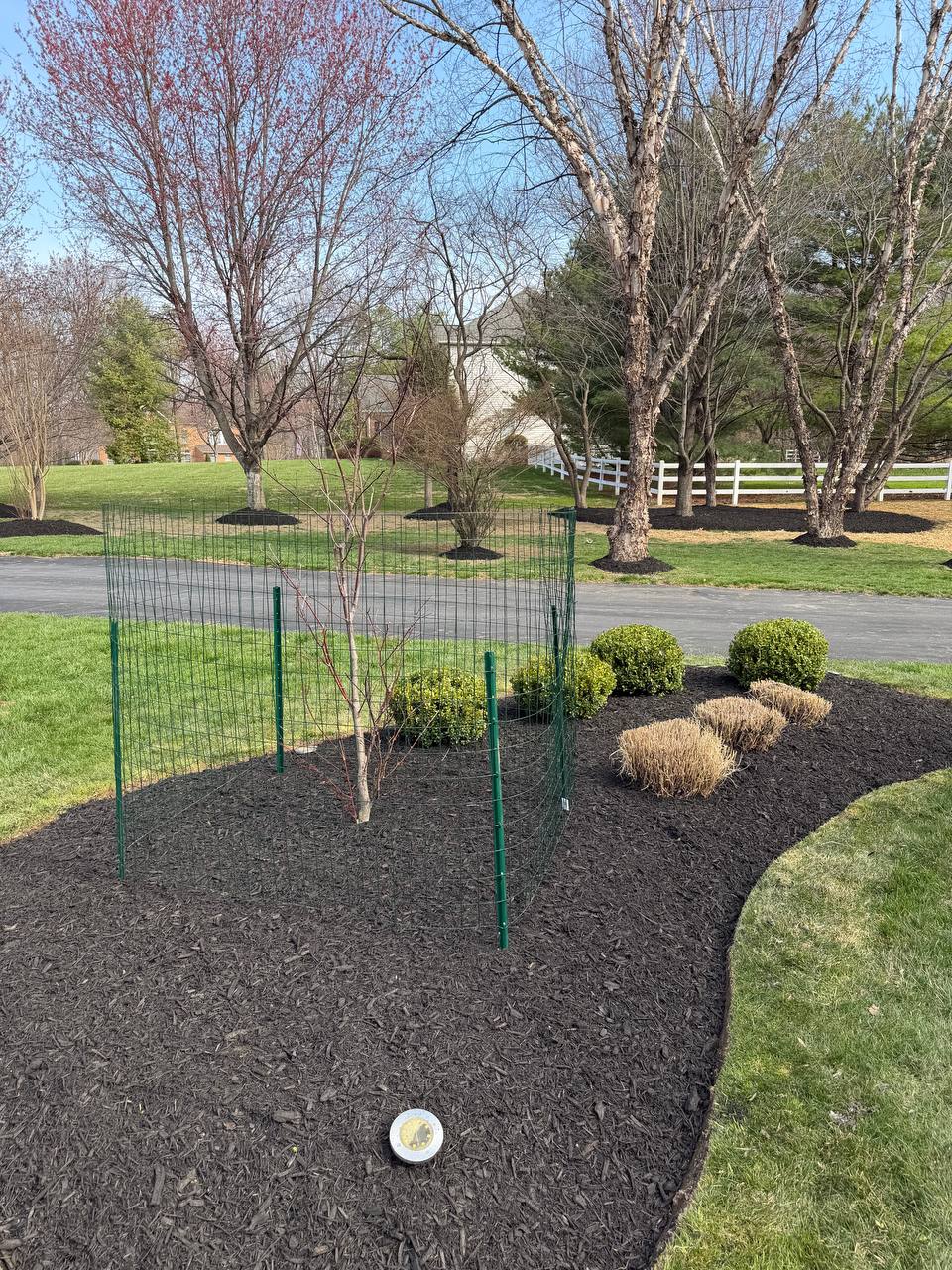
To plant a shade bed under a mature tree, check the light and the roots first. Then choose plants suited to your soil and sun, and plant gently around the major roots instead of cutting them. Add a thin layer of mulch and keep it off the trunk. Most trouble comes from rushing past the first two checks.
Green Diamond Landscaping LLC is a family-owned company based in Reisterstown, MD, and our landscaping and garden design work often starts under big old trees. Here is the order we suggest for a Maryland yard.
Why is it hard to plant under mature trees?
Big trees take most of the light, water and nutrients in the soil beneath them. New plants have to compete with roots that were there first.
The ground under a tree is often dry, packed and full of roots. Rain gets caught by the canopy, and the tree drinks what reaches the soil. Many plants sold as shade plants still struggle there if the roots are too thick. That is why a good bed starts with a look at the site, not a trip to the nursery.
How much light does the bed really get?
Watch the spot through the day and note when sun reaches it. Deep shade, partial shade and dappled light call for different plants.
Use this simple routine:
- Visit the bed in the morning, midday and late afternoon.
- Write down when direct sun touches the soil.
- Note whether the light is steady or moves in patches.
- Check the same spot again once the trees leaf out, since summer shade is heavier than early spring shade.
- Match the plants to what you recorded.
A bed that gets bright patches under a high canopy can hold more plant types than a bed under dense low branches. Our approach is plant selection suited to your soil and sun, chosen after the crew walks the property with you.
Plant choice follows from that record. Shade-tolerant ferns, hostas and similar foliage plants often handle low light better than sun lovers do, and groundcovers can fill gaps between roots. Ask which ones fit your light and your soil before you buy, because a plant that thrives in one yard may fail in another.
What do roots mean for planting depth?
Roots set the limit on how deep you can dig. Dig small holes, and do not cut large roots to make room.
Surface roots feed the tree and help hold it up. Cutting big ones can stress the tree, and the damage is hard to see until later. Instead, use plants that fit in small pockets between roots, or small container plants that need little digging. Loosen the soil by hand where you can. If you hit a thick root, move the hole over.
Do not pile soil over the base of the tree to build a raised bed. Extra soil against the roots and trunk can hurt the tree over time. For a bed with heavy roots, a tree service may need to weigh in. Green Diamond coordinates tree removal and stump grinding through a trusted tree-service partner, and our tree removal page explains how that works.
What mulch and edging help?
A thin, even layer of mulch helps hold moisture and keeps weeds down. Keep it pulled back from the trunk so the bark can breathe.
Spread mulch a few inches deep at most, and leave a gap around the base of the tree. Piling it up against the trunk, often called a mulch volcano, holds moisture against the bark and invites rot. A clean edge also helps. Edging defines the bed, keeps turf from creeping in, and makes the whole area look finished. Refresh the mulch lightly as it breaks down rather than adding thick layers on top.
Start small. A modest bed with a few well-chosen plants is easier to water and easier to fix than a large one. You can always widen it next season once you see how the first plants settle in.
When should you ask for a walk-through?
Ask for a walk-through when the roots are thick, the light is hard to judge, or earlier plantings under the tree have failed. A second pair of eyes can save a season.
Green Diamond walks the property with you before anything is scheduled. We look at the tree, the light, the soil and the way water moves. Then we talk through what could work. If you live near Pikesville, you can read more on our Pikesville landscaping page.
We serve homes within about 25 miles of Reisterstown, across Baltimore County and Carroll County, including Owings Mills, Eldersburg, Sykesville and Westminster. We respond to requests the same day.
Ready to turn the dull patch under your tree into a real bed? Call Green Diamond Landscaping LLC at (410) 847-9393 for a free estimate.
Frequently Asked Questions
Can grass grow under a large tree?
It usually struggles, because the tree takes the light and water. A planted bed with mulch is often a better fit than forcing turf where roots and shade are heavy.
Should I water new plants under a tree more often?
Often yes, at first. The roots above compete for moisture, so new plants may dry out faster. Check the soil by hand and water when the top layer is dry.
Is it okay to add topsoil around tree roots?
Only a very thin amount, and never against the trunk. Thick soil over roots can harm the tree. Ask for advice before adding anything deeper than a light dressing.
When is the best time to plant in a Maryland shade bed?
Spring and fall are usually kinder to new plants because the weather is milder. Avoid planting in the hottest part of summer, when roots and plants are under the most stress.