
Standing water in the yard is more than a nuisance. It can thin the grass, leave muddy paths near the house and attract pests. The fix often starts with the basics: how the ground slopes, where roof water goes and which plants and surfaces hold moisture. Here are the main drainage fixes to consider for a wet Maryland yard.
Why Yards Stay Wet
Some yards hold water because the ground is flat or slopes toward the house. Others have heavy clay soil that does not let water soak in. Compacted soil, from foot traffic or heavy equipment, can make the problem worse. A wet spot may also come from roof water that pours onto the same area again and again.
Before you pick a fix, watch the yard during and after a rain. Note where the water pools, how long it stays and whether it drains away or sits for days. Those clues point to the right solution.
Start With Grading
Grading means shaping the soil so water moves away from your home. Ideally, the ground slopes gently away from the foundation. Low spots can be filled with good soil, and high spots can be lowered. Grading is often the first step because it affects how every other drainage feature works.
Grading work should be planned with the property in view. A walk-through helps us see where water flows and where it collects. We walk the property with you before anything is scheduled, so the plan fits your yard and your goals.
Fix the Downspouts First
Roof water is one of the most common causes of soggy yards. A downspout that dumps water right at the foundation can soak the soil around the house and the lawn nearby. Extending the downspout or routing it to a better outlet can move water away from the problem area.
- Check that gutters are clear and sloped toward the downspouts.
- Look for splash marks or bare soil at each downspout outlet.
- Extend the outlet so water lands well away from the house and the lawn edges.
- Consider a splash block or a buried line where the area needs more control.
Downspout work is often simple, and it can make a big difference. It is a good place to start before you move on to larger projects.
Improve the Soil
Heavy clay and compacted soil hold water. Loosening the soil and adding organic material can help water soak in. Aerating the lawn is one option for compacted areas. Mixing compost into planting beds can also improve how water moves through the soil over time.
Soil changes take time, so watch the spot through the seasons. Notice whether the water clears faster after each rain. Steady progress is a good sign, even if the yard does not look different right away.
Use Planting Beds to Manage Water
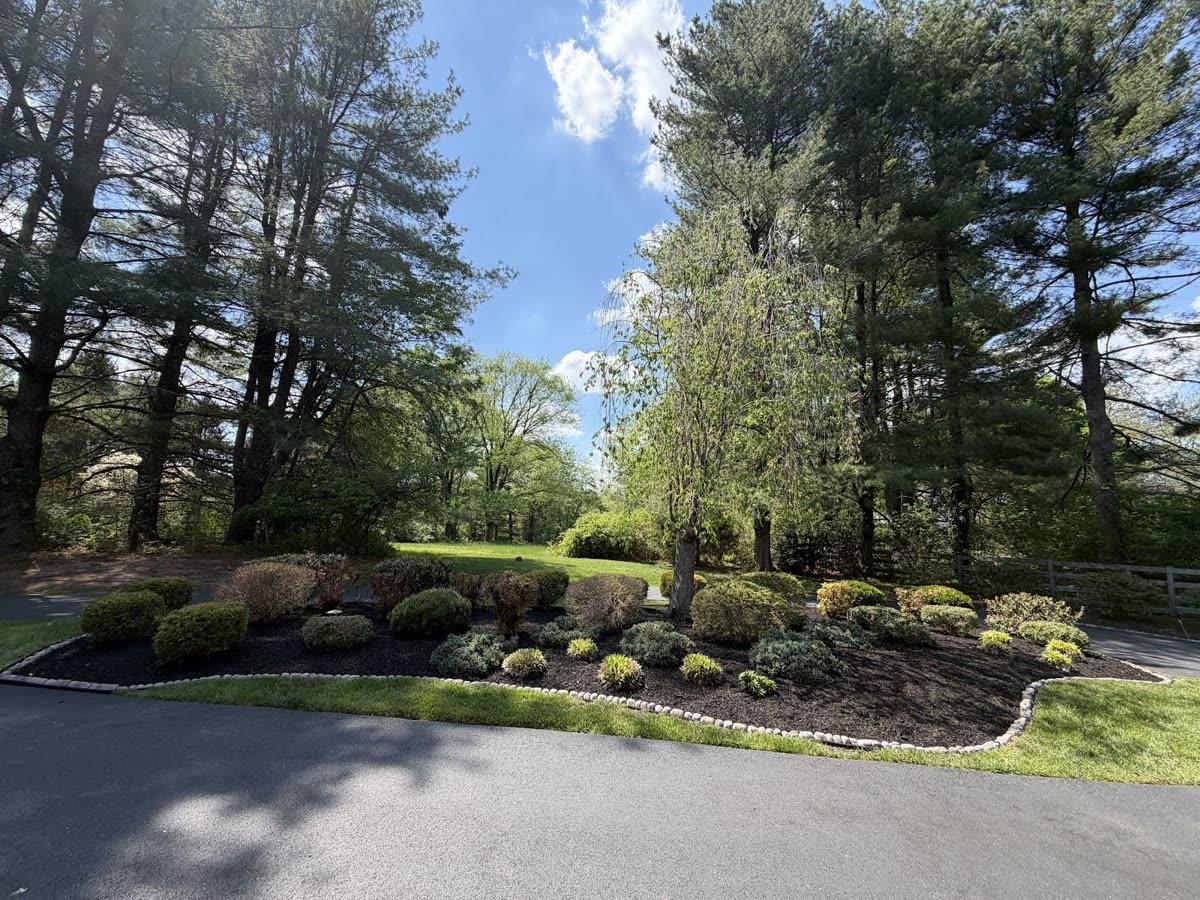
Planting beds can soak up and slow water. Deep-rooted plants and dense groundcover hold soil in place. A well-planned bed can also catch runoff before it reaches the lawn or a walkway. Native plants that handle damp conditions are a good starting point for low, wet areas.
Mulch helps too, but it should not block the soil or pile against plant stems. Keep mulch thin and even, so water can reach the ground below. Our landscaping and garden design team can plan beds that fit the way water moves through your yard.
Hardscape Options for Wet Areas
When a yard stays wet, hardscape can be part of the answer. Stone paths and patios can move foot traffic off soft ground. Permeable pavers allow some water to soak through the surface. Dry creek beds and stone swales can carry runoff across the yard in a controlled way.
Each option has trade-offs. Stone work needs a stable base and good drainage underneath. Ask how the surface will drain, how it will look and how it will be maintained. A good plan balances function with the way you use the yard. Our hardscaping and stone work crew can help you compare these features.
Plan the Fix in Stages
You do not have to fix everything at once. Start with the simplest step: clean the gutters and extend the downspouts. Next, check the grade near the house. Then work on the soil and planting beds. Save larger hardscape projects for last, once you know how the water still moves.
This staged approach lets you see what helps before you spend more time or effort. It also keeps the yard usable while the work moves forward. Each step builds on the one before it.
Questions to Ask a Landscaper
Bring these questions to your walkthrough:
- Where does the water come from: roof, lawn, neighboring ground or a spring?
- Which fixes address the cause, not just the wet spot?
- How will the plan change the look of the yard?
- What maintenance will the new features need each season?
- How will the work affect the lawn and beds while it is done?
A good crew will answer these questions in plain language and explain the trade-offs. If an answer is unclear, ask again until it makes sense.
What to Expect From a Visit
Our team walks the property with you first. We look at slope, downspouts, soil, planting beds and hardscape areas. We will tell you what we see and what we would do first. We also explain what is realistic for your yard.
Free estimates give you a written plan to compare. Same-day response to requests means you do not have to wait long to start the conversation. Take your time with the plan, and ask anything you need to know before you decide.
Standing water in your Reisterstown, Owings Mills, Westminster or Towson yard? Green Diamond Landscaping LLC is a family-owned landscaping and lawn care company based in Reisterstown, MD. We serve homes across Baltimore County and Carroll County. Request a free estimate by calling (410) 847-9393 today.
Frequently Asked Questions
What causes standing water in a yard?
Flat or sloped ground, heavy clay soil, compacted soil and roof water can all cause standing water. Watching the yard during a rain helps find the main cause.
Can downspouts really cause a wet yard?
Yes. A downspout that empties at the foundation can soak the soil nearby. Extending the outlet or routing the water to a better spot often helps.
Is hardscape a good fix for a wet yard?
It can be. Stone paths, permeable pavers and dry creek beds can move water and foot traffic in a controlled way. Each option needs a stable base and good drainage.
How do I get started?
Call (410) 847-9393 to request a free estimate. We walk the property with you before anything is scheduled.