
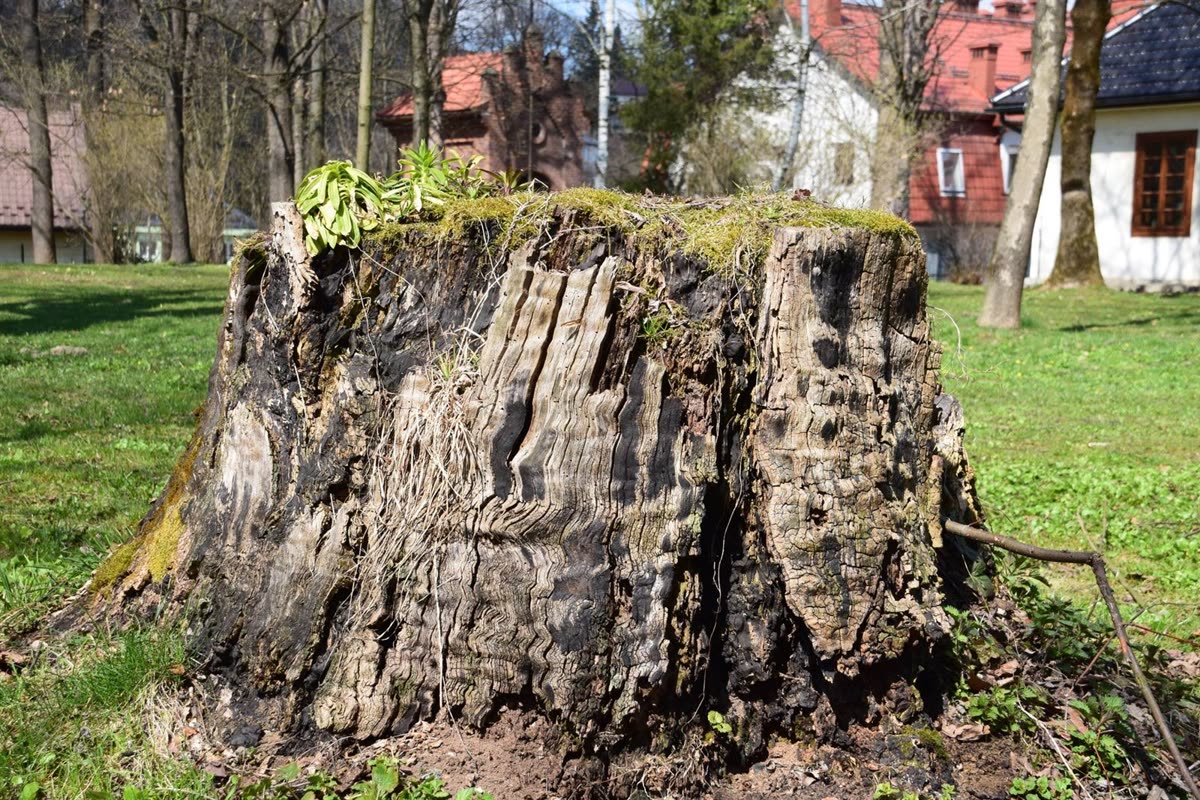
A grinder chews the stump down below grade, the wood chips are hauled off if you want them gone, and the spot is ready for mulch, sod or a patio. The tree is already down, so grinding is what clears the last piece. Here is how it works for Maryland yards, step by step.
What does stump grinding actually do?
Stump grinding turns the visible stump into chips by cutting it down with a rotating blade. The machine works from the top of the stump toward the ground and keeps going until the wood sits under the surface.
Green Diamond Landscaping LLC coordinates tree removal and stump grinding through a trusted tree-service partner. You talk to us, we walk the property with you, and the partner handles the cutting and grinding. That keeps one point of contact for the whole project. You can read about this on our tree removal and stump grinding page.
Grinding is different from pulling a stump. Pulling digs out the roots and can leave a large hole. Grinding leaves the roots under the soil to break down slowly, and it disturbs much less of the yard.
What happens step by step?
The job follows a clear order. Here is what to expect from start to finish:
- We walk the property with you and look at the stump, the roots and the space around it.
- You point out anything the crew should avoid, like a sprinkler head, a buried line or a fence.
- The crew clears the area around the stump and moves loose items out of the way.
- The grinder cuts the stump below grade in passes, working side to side.
- Any large surface roots are ground down where they sit in the way.
- The chips are raked up and hauled away, or left in place if you want them.
- The crew checks the spot and leaves it ready for the next step.
Before the day, mark any hidden items you know about. Underground utilities, drain lines and irrigation pipes matter. If you are not sure what is under the stump, say so during the walk-through so it can be sorted out first.
What happens to the chips and debris?
The chips can be hauled away or stay in the yard, whichever you choose. A grinding job makes a pile of wood chips, and the pile can be large. A big stump can fill the hole and spill beyond it.
If you want a clean spot, ask for the debris to be removed. If you have garden beds nearby, some owners keep a little of the chips for a path or a bed border. Fresh chips are not the same as finished mulch, so use them where they will not touch young plants.
Ask about the leftover soil, too. As the wood breaks down, the ground can settle. A small amount of fill soil on top helps the area stay level.
Why grind below grade?
Grinding below grade means the stump sits under the soil line, so nothing sticks up in the way of what comes next. Stumps are ground down below grade so the spot is ready for new mulch, sod or a patio.
A stump left at ground level gets in the way of a mower and can trip a child or a guest. It also hides in tall grass. Taking it below grade gives you clean ground to work with.
How deep you go depends on what you plan to put there. A patio or a path needs more room than a patch of grass. Tell us your plan during the walk-through, and we will pass it along so the depth fits the job.
What can go in the spot afterward?
You have a few good options: mulch, sod, grass seed, a new plant or hardscape. Each one works best when the ground is prepared the right way.
- Mulch: the simplest choice. It covers the spot and blends it into a bed.
- Sod or seed: add topsoil first, then level and water well.
- A new tree or shrub: plant a little to the side if the old roots are still breaking down.
- A patio or path: the base needs firm, level ground, so plan the depth before grinding.
If you plan to replant in the same spot, wait to see how the ground settles. Old roots decay over time and can leave soft areas. A small bed of mulch is a good cover while you decide.
For stonework, our hardscaping service can build a patio or walkway where the stump used to be. Seasonal cleanups can also tidy the surrounding beds so the repaired spot blends in.
How does grinding fit with the removal job?
Grinding is usually the last step after the tree comes down. The crew cuts and clears the tree first. Then the stump is ground, the area is cleaned and the yard is ready for its new look.
Doing both together saves you from scheduling twice. It also lets the crew see the full picture, including where the trunk fell and where the roots run. If you already had a tree removed, you can still call about grinding on its own.
For a yard in Towson, Pikesville or Owings Mills, see our Towson landscaping page for what we do in the area.
Green Diamond is a family-owned landscaping and lawn care company based in Reisterstown, MD. We serve homes within about 25 miles of Reisterstown, across Baltimore County and Carroll County, and we respond to requests the same day. Call (410) 847-9393 for a free estimate. We will walk your property with you before anything is scheduled.
Frequently Asked Questions
Can I grind a stump that is already old?
Yes. Old stumps can be ground the same way. Dry, hard wood may take a little longer to cut, but the result is the same: the stump goes below grade and the spot is ready for the next step.
Will grinding damage my lawn?
Grinding leaves a patch of disturbed ground and chips. The area around it is usually left in good shape when the crew is careful. Plan to add soil and sod or seed afterward.
Do the roots go away after grinding?
Large surface roots can be ground down, but deeper roots stay in the soil and break down over time. That is why we suggest waiting before planting a new tree in the same spot.
Can you haul away the wood chips?
Yes, if you want them gone. You can also keep some for a path or a bed. Tell us which you prefer during the property walk-through so the plan is clear.