
A tree close to your house or power lines needs a careful plan. Falling limbs, root damage and contact with wires can cause serious harm. Before any work begins, look at the tree, the area it could hit and the utilities nearby. This guide explains what to check and what to ask before work starts.
Why Trees Near Homes Need Extra Care
A tree that looks healthy in an open yard can become a risk when it grows near a roof, a fence or a driveway. Branches may rub siding or gutters. Roots can push against foundations, walkways or patios. After storms, a tree may begin to lean toward the house.
Trees near power lines carry an extra layer of concern. Limbs that touch lines can cause outages, fires or electric shock. A limb that looks far away can still move into a line in strong wind. Work near lines should always be handled by trained crews.
Look for Warning Signs
Check your trees after storms and during seasonal walks around the yard. Look for cracks in the trunk, large dead limbs, a lean, fungus at the base or soil that lifts near the roots. These signs do not always mean removal is needed. They do mean the tree deserves a closer look from a professional.
Take photos of any concern and note the date. Photos help a professional see what changed and how quickly it changed.
- Dead or hanging branches over the roof or driveway.
- New cracks or splits in the trunk or main limbs.
- A lean that has grown worse over time.
- Mushrooms or soft spots near the base.
- Branches growing into or rubbing against power lines.
Stay Safe Around Power Lines
Keep yourself and your family away from any tree limb touching a power line. Do not climb the tree, cut branches near wires or try to pull a limb free. Treat every line as live until the utility confirms otherwise.
Contact your local utility company if a line is damaged, sagging or in contact with a tree. Ask the utility how it handles clearance near its lines. Many utilities manage that work on their own schedule, so do not assume it has already been done.
Also call 811 before any digging near a stump or root area. Underground lines can be closer to the surface than you expect.
Plan the Removal Around Your House
A safe removal plan looks at the direction of fall, the space for equipment and the access to the work zone. Crews may need to cut the tree in sections and lower each piece with ropes. Fences, cars, landscape beds and the roof all need protection.
Ask how the team will protect your home and your yard. Good plans include clear work zones, protection for sensitive areas and a cleanup plan for branches and debris.
Stump Grinding and Root Concerns
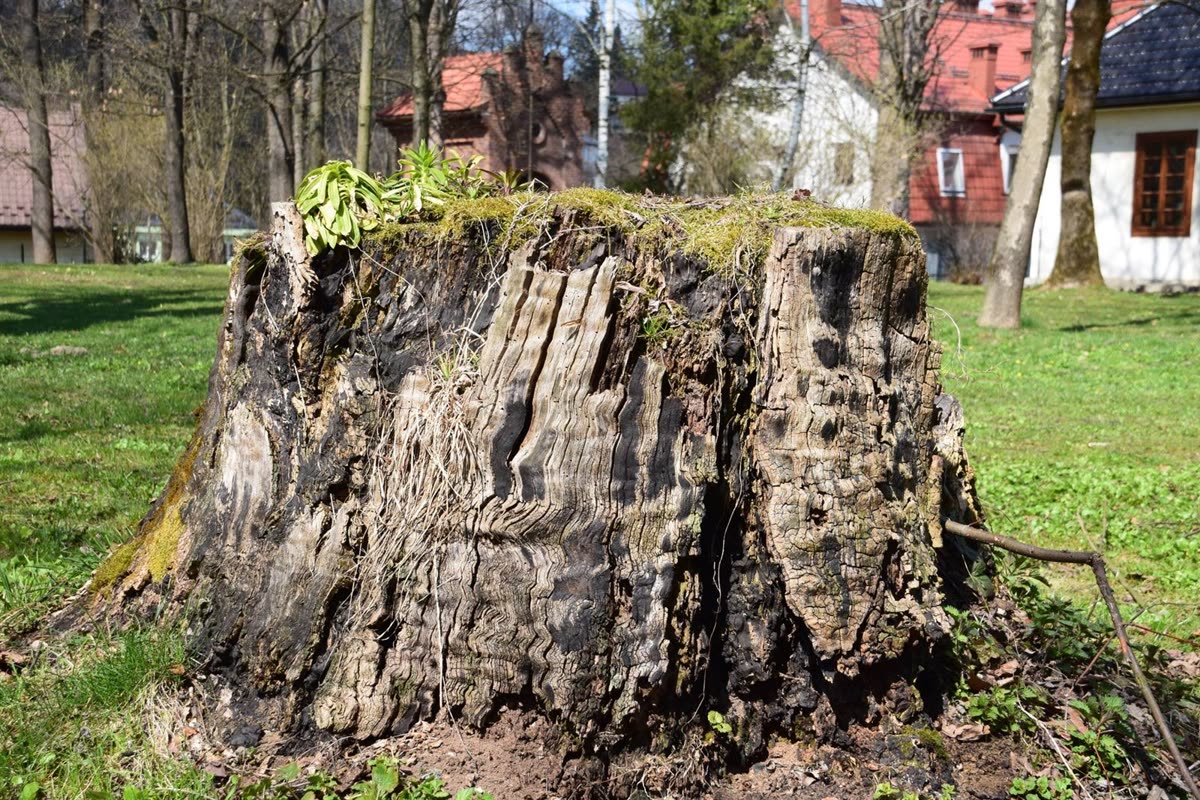
After a tree comes down, the stump and roots remain. Stump grinding removes the stump below the surface, so you can replant or build over the spot. Roots left in the ground can continue to push on patios and walkways over time.
Ask how deep the grinding goes and how the hole will be filled. A clear answer helps you plan the next steps for the space.
What to Ask Before Work Starts
A good plan starts with clear answers. Before you agree to any work, ask:
- Who will be on site, and how long will the work take?
- How will you protect my house, fence, driveway and landscape beds?
- Who performs the tree work, and how do you coordinate it?
- What happens to branches, logs and debris?
- Will you walk the property with me before anything is scheduled?
- How will you handle any utility lines in the work area?
Replanting After Removal
Removing a tree opens space in the yard. Sun and soil conditions change, so plan the next steps early. Choose plants that fit the light and moisture in the new area. Native plants can support local wildlife and suit many Maryland yards. A simple landscape plan keeps the new space balanced.
Watch the new space for a few weeks before you buy plants. Sun patterns can surprise you once the tree is gone, and that view helps you choose plants that fit.
Tree Care in Maryland Yards
Yards across Baltimore County and Carroll County face cold winters, humid summers and storm seasons. Storms can weaken limbs and loosen roots. Regular checks help you catch problems before they grow. Learn more about our tree removal and stump grinding services.
Landscaping plans can also help you rethink the space around a removed tree. Our landscaping services cover garden design, planting, lawn care and seasonal cleanups.
Talk With Green Diamond
Green Diamond Landscaping LLC is a family-owned landscaping and lawn care company based in Reisterstown, MD. We serve homes within about 25 miles of Reisterstown, across Baltimore County and Carroll County, including Owings Mills, Towson, Westminster and Pikesville. We walk the property with you before anything is scheduled, and we offer same-day response to requests.
Tree removal and stump grinding are coordinated through a trusted tree-service partner. We offer free estimates. Call (410) 847-9393 to request your free estimate and walk the property together before any work is scheduled.
Frequently Asked Questions
Can I remove a tree near power lines myself?
No. Work near power lines should be handled by trained crews. Contact your utility company if a line is affected.
Should I remove a tree that is leaning?
Not always. A lean that is getting worse deserves a closer look. Ask a professional to inspect the tree and the roots.
What happens to the stump after removal?
The stump and roots can stay in the ground unless they are ground down. Stump grinding removes the stump below the surface, so you can replant or build over the spot.