
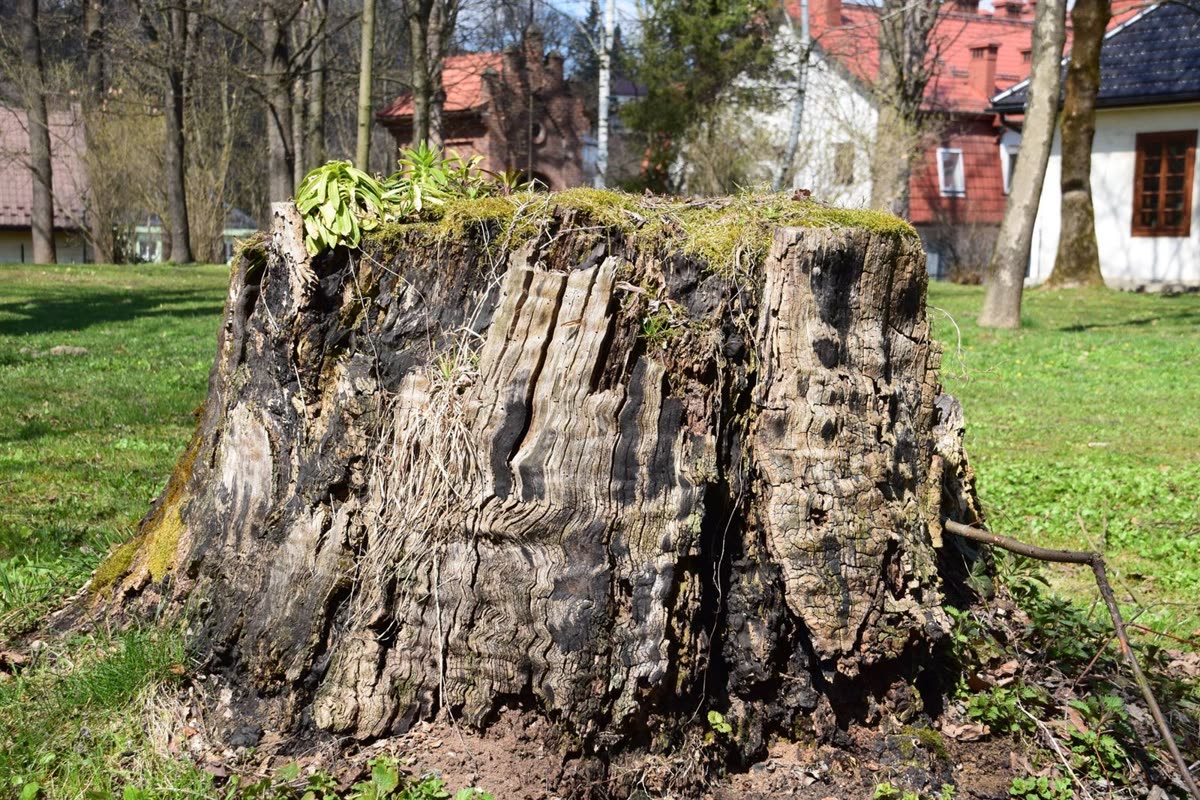
Stump grinding shreds the visible stump into wood chips several inches below grade, leaving the root system in the ground to decompose naturally over years. Full stump removal pulls the entire stump and major roots out of the ground, which disturbs more soil but clears the area completely and immediately. Most residential situations call for grinding; full removal is for cases where nothing can be left behind.
What’s the actual difference between grinding and full removal?
Grinding destroys the stump in place; full removal extracts it, roots and all.
A stump grinder is a machine with a rotating cutting wheel that chews the stump down into wood chips and sawdust, typically 4–6 inches below the surrounding soil surface. The root system below that stays in the ground and breaks down over the following years. Full removal, by contrast, usually involves digging out or pulling the stump with equipment strong enough to extract the main root ball, which means a bigger hole, more soil disturbance, and more cleanup.
What happens to the roots after grinding?
The roots stay in the ground and decompose gradually — they don’t keep growing once the tree is gone.
Once a tree is cut down and the stump ground out, the root system has no living top growth to sustain it, so it stops growing and begins to decay naturally, the same as any dead wood breaking down in soil. This process typically takes a few years depending on root size, wood density, and soil conditions. In the meantime, the ground above the roots may settle slightly as they decompose, which is worth knowing if you’re planning hardscaping over that spot — see our hardscaping & stone work.
How deep does stump grinding actually go?
Most residential grinding goes 4–6 inches below grade, though depth can be adjusted for the situation.
That depth is usually enough to grind below where a mower deck would hit and to allow a few inches of soil and grass seed or sod on top. If the plan is to install something with a foundation — a shed, a paver patio — over that spot, deeper grinding or full removal is worth discussing, since decomposing roots underneath a rigid structure can cause settling over time.
Can I plant something new where a stump used to be?
Yes, but grinding leaves wood debris in the hole that needs to be dealt with before planting.
After grinding, the hole is typically backfilled with a mix of the wood chips and topsoil. Wood chips decompose and can temporarily tie up nitrogen in the soil as they break down, which can affect a new plant’s early growth if it’s planted directly into that backfill. For anyone wanting to plant right on the same spot, mixing in fresh topsoil and giving it a season before planting, or removing more of the chip debris first, generally gives new plantings a better start.
What determines whether grinding or full removal makes more sense for a property?
The right choice usually comes down to what happens on that spot afterward, not personal preference.
If the goal is simply to reclaim the yard for grass, mulch beds, or general landscaping, grinding is almost always the practical choice — it’s faster, less disruptive to the surrounding soil, and leaves the root system to break down naturally underground over time. Full removal becomes worth the extra digging and cleanup when something with a foundation is planned for that exact spot, such as a paver patio, a shed pad, or a new tree going into the same hole. Stump size and location matter too: a stump tucked tight against a fence line, retaining wall, or driveway edge may call for a more careful approach than one sitting out in open lawn, which is part of why we walk the property before recommending either method.
Is it safe to grind a stump near a house, driveway, or utility lines?
Grinding itself is a controlled, localized process, but access and underground utilities are the two things worth flagging before work starts.
A stump grinder needs clear room to maneuver, so a stump wedged tight against a foundation, fence, or driveway edge sometimes needs hand-digging or a smaller machine to avoid marking hardscaping or siding nearby. Underground utility lines — particularly older sewer, gas, or irrigation lines that weren’t marked when a property was built — are the bigger concern, since grinding depth of several inches below grade can occasionally reach shallow-buried lines. Calling 811 before any digging or grinding project, even one that looks minor, is standard practice everywhere in Maryland and worth doing regardless of who ends up doing the work.
Why is tree removal handled through a partner instead of directly?
Full tree removal and stump grinding are specialized work that call for their own equipment and expertise, so we coordinate that portion through our trusted tree service partner rather than doing it in-house.
Our crews handle the landscaping, lawn care, hardscaping, and cleanup side of a project, and the tree service partner handles the tree-specific work — takedown, grinding, or removal. That split lets each side focus on what they do, while we stay involved in scheduling and the surrounding landscape work (regrading, replanting, mulch, sod) that usually follows once a stump is gone. See our full tree removal & stump grinding page for more.
What should I expect for cleanup after stump grinding?
Expect a pile of wood chips at the site and some ground disturbance around the former stump location.
- Wood chips from grinding are usually left on-site unless hauling them away is arranged separately
- The immediate area around the ground stump will have a shallow depression until it’s backfilled
- Grass or ground cover directly around the stump often needs reseeding or patching afterward
- Larger surface roots that extended beyond the stump itself may still be visible and are typically left unless they’re in the way of mowing or foot traffic
Have a stump you’d like assessed? The estimate is free and we respond the same day.