
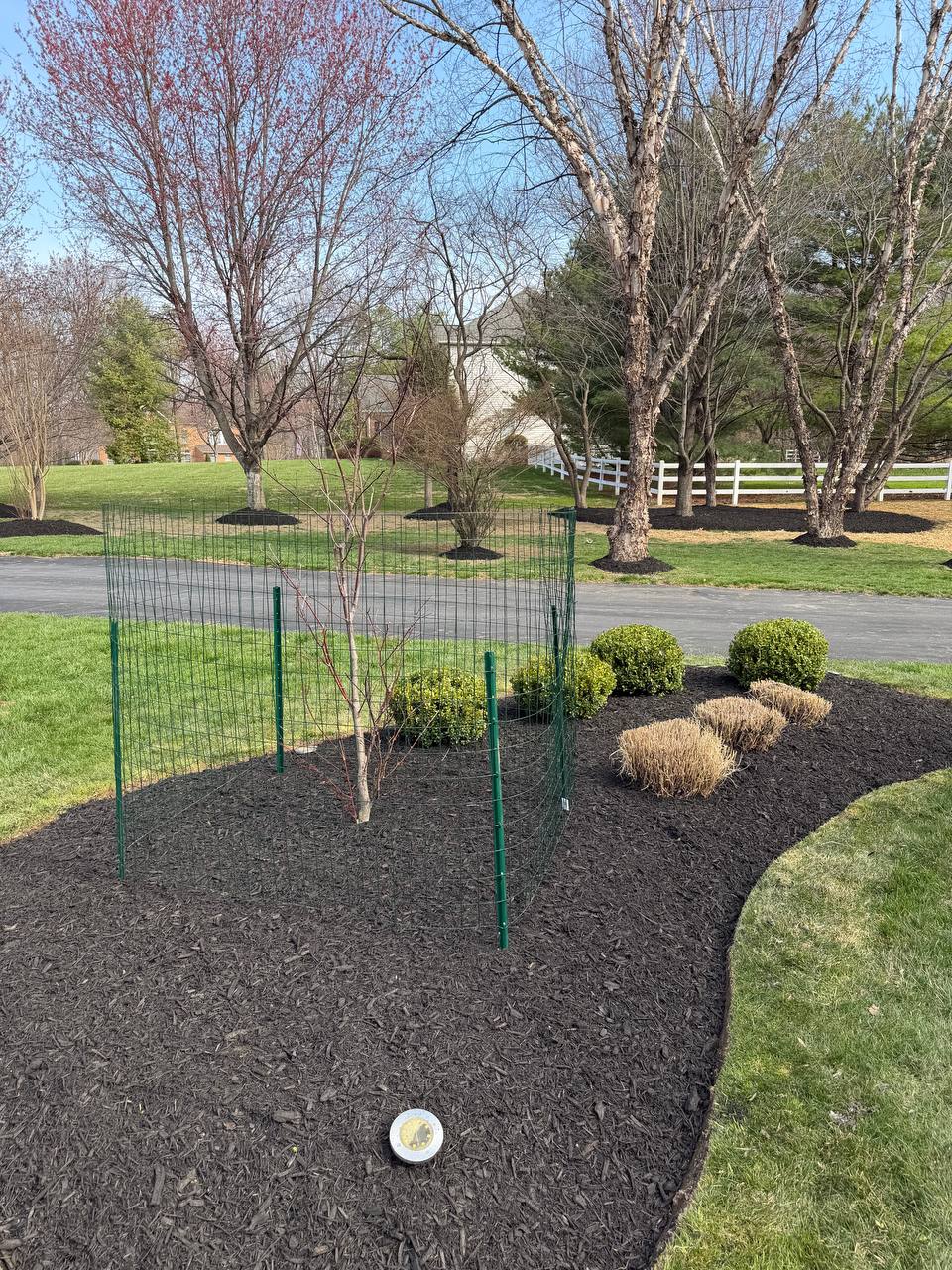
Winter mulch should protect roots without touching stems or piling up thick. The most common mistakes are volcano mounds against the trunk, a layer that is too deep and mulching before the ground has cooled. Each one can smother shrubs and perennials instead of protecting them.
The Green Diamond crew sees these mistakes in yards across Baltimore County and Carroll County every cold season. Mulch insulates plantings through winter when it is placed and kept thin enough to breathe. Our landscaping work includes mulch beds set up with that in mind.
Why mulch in winter at all?
Mulch holds a steadier soil temperature around roots. In Maryland, the ground freezes and thaws many times over a winter, and that swing can push shallow roots upward and stress young plants.
A good layer slows those swings. It also holds soil moisture and keeps weeds down until spring. The key words are "good layer." Too much or the wrong placement turns a helpful cover into a problem. If you want a refresher on the basics, see our mulching guide for Maryland.
What is the mulch volcano mistake?
A mulch volcano is a cone of mulch piled high against a trunk or stem. It looks tidy, but it traps moisture against the bark and invites rot, insects and rodents looking for a winter shelter.
The fix is simple. Pull the mulch back so a small ring of bare soil surrounds each stem or trunk. Spread the mulch out flat from there, with the thickest part farther from the plant. Think of a doughnut, not a mountain.
This mistake is common after fall cleanups. Fresh mulch is often shoveled around plants quickly, so it is worth a second look in late fall.
How thick is too thick?
Mulch is too thick when it stays soggy or blocks air from reaching the soil. A layer of a couple of inches is usually plenty for most beds. Piling more does not add warmth, and it can suffocate roots.
Thick, wet mulch can also mat down into a crust. Rain and melting snow then run off instead of soaking in, and roots dry out below the surface. Fluffy, coarse material such as shredded bark breathes better than fine, packed material.
If last year's mulch is still there, rake it up lightly first. Add only enough new mulch to bring the layer back to a modest depth.
When should mulch go down?
Mulch goes down after the first hard frosts, once the soil has cooled. Putting it down too early keeps the ground warm, which can delay dormancy and give pests a cozy place to settle.
Mulching before the plants are ready can also hide problems. Perennials need to die back or be cut back first. Fallen leaves and debris should be cleared out, since they can hold disease over winter.
Here is a simple order that works well:
- Cut back perennials that need it and clear debris.
- Water well if the soil is dry before the freeze.
- Wait until after the first hard frosts.
- Pull old mulch away from stems and trunks.
- Spread fresh mulch evenly, leaving a gap around each plant.
What about newly planted shrubs and perennials?
New plantings need the most care, because their roots have not spread yet. A thin layer helps them, but the gap around the stem matters even more than it does for older plants.
Water new plants well before the ground freezes. Then add mulch after the soil has cooled, and check the beds after heavy rain or snow. If the layer has slumped against a stem, pull it back and fluff it. A quick look every few weeks is enough to catch problems early.
Pine needles, shredded hardwood and similar coarse materials all work, as long as they stay loose. Avoid piling fresh grass clippings, which pack down and turn slimy.
How do you tell mulch is hurting a plant?
Look for soft, dark or peeling bark at the base, yellow leaves that do not recover and a sour smell from the mulch. These signs point to trapped moisture or poor airflow around the stem.
- Bark that feels soft or looks damp near the soil line
- Mulch that has grown a white, fuzzy layer
- Stems that look pale or weak in early spring
- Gnawed bark from rodents nesting in thick mulch
If you spot any of these, pull the mulch back and let the area dry. Healthy plants often bounce back once air reaches the base again.
Not sure what your beds need? The Green Diamond crew walks the property with you before anything is scheduled, so you can see the problem spots yourself. We serve Reisterstown, Owings Mills, Westminster, Towson and nearby towns, and estimates are free. Call (410) 847-9393 to set up a free estimate.
Frequently Asked Questions
Can I mulch over fallen leaves?
It is better to clear thick, wet leaves first. They can mat down, hold disease and block air. A light scatter of shredded leaves mixed into the mulch is fine, but pull heavy piles away from stems.
Should I mulch evergreen shrubs too?
Yes, a thin layer helps evergreens hold moisture and soil warmth. Keep it off the trunk and the lower branches, and make sure the soil is moist before it freezes.
Do perennials need mulch in a Maryland winter?
Many benefit from a light layer after the ground cools, especially new plantings. It helps keep soil temperature steady. Keep it loose and away from the crown of the plant.
Can I fix a mulch volcano in winter?
Yes. On a day when the ground is workable, pull the mulch back from the trunk or stem and spread it flat. Leave a small bare ring of soil around the base.