
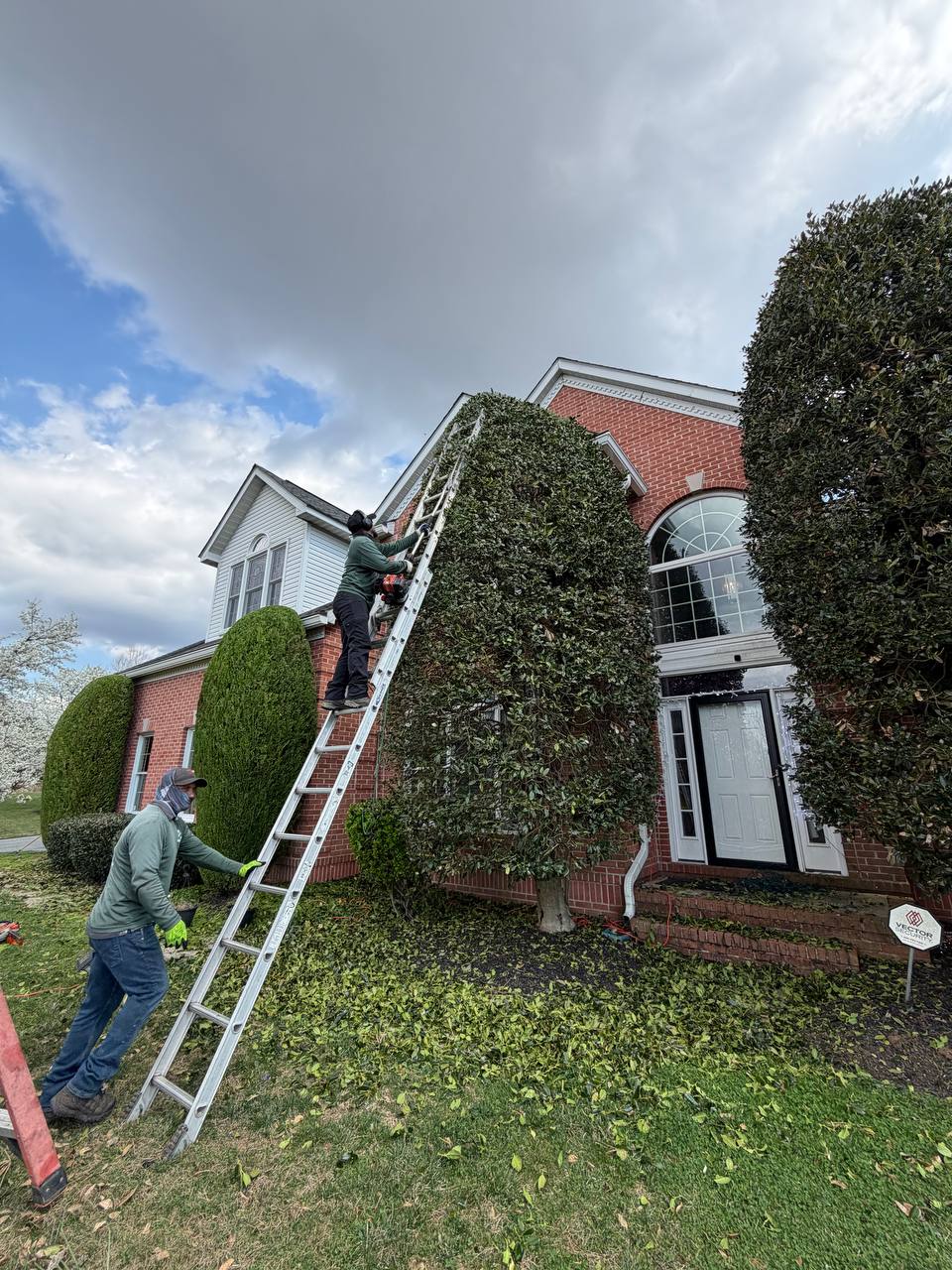
Dormant pruning in Maryland means cutting shrubs while they are leafless, usually from late December through early March. It works best for summer-flowering shrubs and for structural cuts, because the framework is easy to see and wounds close before spring growth starts. Spring bloomers such as forsythia, azalea, rhododendron and lilac should wait until right after they flower.
What Is Dormant Pruning and When Does It Happen?
Dormant pruning is cutting a plant while it has no leaves and before new buds swell. In Maryland that window generally runs from late December to early March, with the best days being mild ones when the ground and branches are not frozen.
Pruning at this time lets you see the full branch structure, so it is easier to remove crossing limbs and open the center of a shrub. Because the plant is not pushing new growth, the cuts have a full season to heal before the growing season begins.
Which Shrubs Can Be Pruned While Dormant?
Summer-flowering shrubs bloom on growth made in the current season, so cutting them back in late winter does not remove this year’s flowers. Good candidates include:
- Rose of Sharon
- Shrub roses
- Abelia
- Beautyberry
Any shrub can have dead, crossing or badly placed branches removed during the dormant season, as long as the cuts stay within the one-third limit described below.
Which Shrubs Should Wait Until After They Bloom?
Shrubs and trees that flower early in spring set their buds the previous year. Pruning them in winter or early spring removes the flowers you were waiting for. University of Maryland Extension guidance is to prune plants that bloom before about the end of June right after they flower, and to prune summer bloomers before spring growth starts.
- Forsythia
- Azaleas and rhododendron
- Lilac
- Spring-flowering trees such as dogwood, redbud and ornamental cherry
How Much Can Be Removed in One Season?
A common rule is to remove no more than about one-third of a shrub’s living growth in a single season. Older, thick canes can be renewed gradually by removing a portion of them each year, so the plant stays full instead of being cut back hard all at once.
How Should a Hedge Be Shaped in Winter?
Shape hedges so the base is wider than the top. Light reaching lower branches keeps them leafed out and prevents bare gaps at the bottom. When hedges are shaped narrow at the top and wide at the base, the lower growth stays dense through the season.