
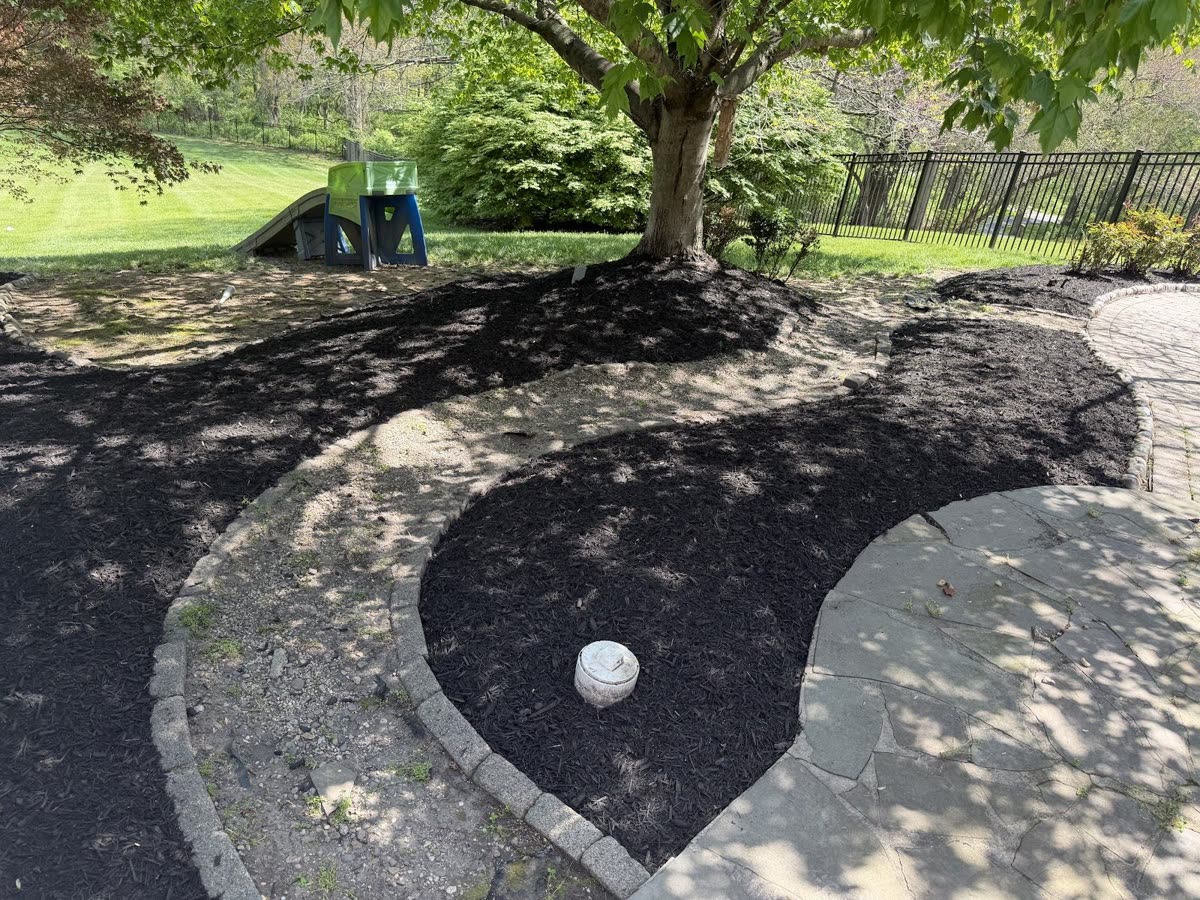
Paver patios and retaining walls can be built in cold weather only when the ground is neither frozen nor saturated while the base is excavated and compacted. Joint sand, mortar and any concrete need milder, dry conditions to set correctly, so work on those steps waits for suitable days. A freeze-thaw winter makes timing the main question, not whether pavers can work at all.
Can pavers and retaining walls be installed in cold weather?
Sometimes, but the limiting factor is the ground and the weather on the day, not the month.
A paver patio is only as good as the base underneath it. If the soil can be dug, graded and compacted properly, the base can be built. If the soil is frozen solid or waterlogged, it can’t. Maryland winters swing above and below freezing, so some days are workable and many are not. That is why a sensible hardscape schedule follows the conditions on the ground rather than a fixed start date.
What does frozen ground do to base prep?
Frozen soil is the biggest risk to a new patio or wall, because it looks solid and then fails when it thaws.
- Frozen ground can’t be compacted the way unfrozen soil can, so the base never reaches the density it needs
- Gravel placed over frozen soil can end up sitting on ice that later melts, leaving voids and soft spots
- Saturated or muddy soil has the same problem in a different form — it can’t be compacted until it drains
- Any settling shows up at the surface of a patio as dips, rocking pavers or uneven joints
The patio doesn’t fail the day it is built. It fails in the first thaw, which is why base conditions matter more than speed. The same freeze-thaw stress is behind the cracking and heaving described in our guide to pavers versus poured concrete in Maryland.
Why do polymeric sand and mortar need warmer, drier days?
Joint sand and mortar are the finishing steps, and both are sensitive to temperature and moisture.
Polymeric sand is activated with a small amount of water and has to cure before rain or freezing temperatures reach it, and mortar and concrete need to cure above freezing as well. Product manufacturers publish minimum temperature and dry-time guidance for their materials, and following it is part of doing the job properly. In practice this means the base and the paver laying can sometimes be staged around the weather, while the joint sand and any mortared elements wait for a milder stretch.
Is a retaining wall different from a patio in winter?
A retaining wall carries more risk because it has soil pushing against it.
A wall depends on a level, well-compacted base and on drainage behind it. Water that collects behind a wall and freezes expands and pushes, which is a common cause of walls leaning or shifting over time. Drainage stone and a stable base are built in for that reason, and a wall built on frozen or saturated ground is starting with the same base problem as a patio, plus load. This is one more reason the timing of excavation and base work matters. Our hardscaping and stone work page covers the retaining walls and borders we design and build.
Why plan a hardscape project in the off-season?
Winter is a good time to plan, even when it is not a good time to dig.
The planning steps don’t depend on the weather. Measuring the space, choosing a layout and materials, thinking through drainage and slope, and confirming what your HOA and local permitting office require can all be settled before the ground thaws. A project that has already been designed and checked can move to the front of the line when conditions allow, rather than starting its planning in the busy part of spring.
Do you need a permit for a patio or retaining wall in Baltimore or Carroll County?
It depends on size, grading and the specific municipality or HOA.
Larger patios, taller walls and projects that change grading or drainage are the ones most likely to need review, and many HOAs have their own material and setback rules. Requirements vary, so confirm with your HOA and your local permitting office before design is finalized. A landscaper can flag what is likely to come up, but can’t waive a requirement.
What do we recommend for a hardscape project before spring?
Use the cold months to plan, and let the ground conditions decide when the digging happens.
- Walk the space and decide what you want it to do — seating, a path, grade control, or all three
- Think about where water goes in a heavy rain, since drainage drives how long hardscaping lasts
- Check HOA rules and permit requirements early
- Ask any contractor what they need from the site conditions before they start excavating, and how they handle joint sand and mortar timing
- Choose the materials once the layout and drainage are settled, not before
If you would like a second set of eyes on a patio, walkway or wall, you can request a free estimate. We will walk the property with you and talk through what makes sense for your site and your timing. Our pressure washing before winter guide covers the other side of freeze-thaw: what dirty, wet surfaces do over a Maryland winter.